

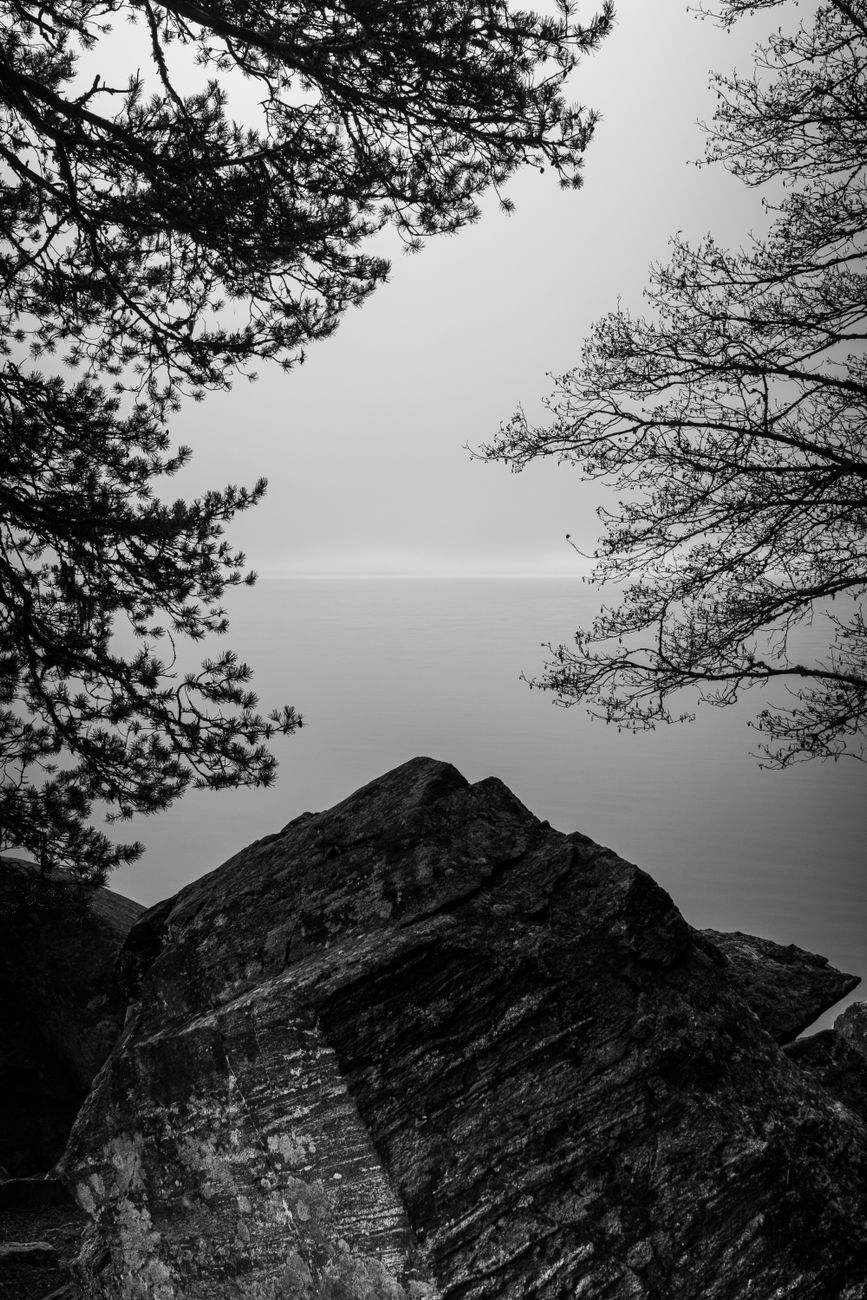
Within the Alpine foothills in Bavaria, unusual boulders mark the panorama. Many legends linger over these mysterious stones, some claiming it was the Satan himself who positioned it there.
In earlier centuries, folks used glacial erratics as locations of worship, giving them names and legendary tales, putting Christian crosses and figures of saints on them, and even constructing total church buildings round them.
Learn Extra: Take a look at all ghostly legends from Germany
One instance is the Satan’s Stone, or the Teufelsstein, a boulder positioned on the fringe of the forest between Grafrath and Inning am Ammersee. Solely its higher half protrudes from the bottom, shielded by the sprawling branches of coniferous bushes.

The Legend when the Satan appeared for Grafath
On this Bavarian legend, the satan needed to destroy the St. Rasso pilgrimage church in Grafrath with an enormous boulder he discovered within the Alps. As he rolled it in the direction of the church, he encountered a intelligent peasant girl. She advised him how extremely far it was to go when he requested for instructions. She had a basket stuffed with torn footwear and advised the satan that she had worn by way of all of them on her manner from Grafrath.

Enraged, the satan vanished from the earth as lightning, leaving the stone behind. Since then, witches and devils have been mentioned to bop on the well-known Satan’s Stone, and plenty of passersby have reported seeing them.
The Satan’s Stone close to Grafrath lies on the fringe of a climbing and biking path. The Satan’s Stone itself shimmers reddish in locations. Conspiracy theorists would possibly see this as proof of bloody rituals. The extra mundane rationalization is that the stone, partially lined in moss, has been painted.
The place Did the Satan’s Stones Come from?
However the place does the Satan’s Stone actually come from? If not the satan himself positioned them, then what? The reason lies 20,000 years in the past when the Würm Ice Age was at its peak, and common temperatures in Europe are far under in the present day’s. Because the Ice Age subsided, the glacier tongue melted and retreated. What remained was a carved-out valley of in the present day’s Ammersee, from which the Amper River flows. Heaped hills of particles and sand transported by the glacier in addition to a single massive boulder, which had beforehand damaged off from a mountain within the Central Alps.
That is the scientific rationalization for these Ice Age “erratic boulders,” as they’re additionally recognized in technical phrases – rocky “wanderers,” in different phrases, that lie in a spot the place they don’t really belong.
The Satan’s Stone in Bräundlstein
The Satan’s stone in Grafrath isn’t the one boulder stone with the same story. There’s the Bräundlstein, for instance, a colossal boulder of about 70 cubic meters within the forest between Wasserburg am Inn and Schnaitsee. A legend concerning the satan can be related to this.

In the future, a steady woman was herding cows and wandered into the woods, the place she noticed the satan himself sitting on the Bräundlstein rock. He had a pile of horse manure on his lap, which he distributed into a number of bowls, and the steady woman was additionally compelled to place a few of it in her apron pocket. Thereupon, the satan vanished, and the manure changed into pure gold, which, nonetheless, introduced no luck. Even in the present day, hollow-shaped depressions are mentioned to be seen on the rock the place the satan’s bowls had stood.
Latest Posts
-


Within the Alpine foothills in Bavaria, unusual boulders mark the panorama. Many legends linger over these mysterious stones, some claiming it was the Satan himself who positioned it there.
-

The Calf Haunting of the Käfigturm: Bern’s Grotesque Jail Tower
Stated to be cursed perpetually after mistreating his prisoners, the jailer in Bern’s former jail tower, Käfitier is claimed to be haunted by the ghost of a monstrous calf.
-

The Lafayette Vampire Grave in Colorado
For many years, dad and mom have advised their kids to be dwelling earlier than darkish in Lafayette, Colorado. The reason is that native lore tells of a vampire rising from his grave within the cemetery. However who precisely was the person behind the story, buried beneath the tombstone?
-

Grave of the Helhest in Roskilde Cathedral
Buried in the identical place because the Danish kings and queens, a legend about one of many smaller graves haunts the Roskilde Cathedral. It’s mentioned {that a} horse was buried right here earlier than any folks, and it haunts the graveyard because the three legged helhest, an omen of loss of life.
-

The Haunted Ruins of Lier Hospital in Norway
As a spot of doubtful drug testing and the place the place most lobotomies had been finished, the Lier Hospital and former asylum was left with a haunted rumor lingering within the decaying partitions. Though many of the buildings are actually torn down, it’s nonetheless remembered as one among Norway’s most haunted locations.
-

A Haunting Helhest in Odense St Canute Cathedral
The Danish ghostly horse spirit Helhest is claimed to roam round St. Canute’s Cathedral in Odense, Denmark. It’s believed seeing the three legged horse is an omen of imminent loss of life.
-

The Helhest Haunting Saint Olaf’s Church in Helsingør
Based on outdated legends and Danish folklore, there are tales of three legged horses haunting the church buildings and graveyards within the nation. in Saint Olaf’s Church, the spirit of the helhest is claimed to be the omen of loss of life.
-

The Hauntings of Gamle Aker Church Over a Dragon’s Den
Might it’s that the oldest church in Oslo additionally has the oldest haunting? From legends a few dragon’s den beneath the construction and the ghostly silhouette haunting, the Gamle Aker Church maybe has extra exercise than what meets the bare eye.
-

The Janissaries Vampires in Veliko Tarnovo
Throughout a time when Bulgaria was beneath the Ottoman Empire, there was discuss a vampire haunting the streets of Veliko Tarnovo. The rumours bought so unhealthy, that the Islamic rulers needed to flip to pagan perception to rid themselves of the bloodthirsty creatures.
-

The Legend of the White Woman of Utstein Monastery
Within the windswept panorama of Norway’s west coast lies the Utstein Monastery, a website steeped in historical past and haunting tales. Often called Norway’s best-preserved medieval monastery, its historical stone partitions and iconic Gothic home windows whisper tales of religion, love, and loss in addition to the ghost of a Woman in White.
-

The Lord Edward Pub: The Insurgent’s Stressed Spirit
After dying for the reason for Irish Independence, it’s mentioned the ghost of Lord Edward is haunting the pub he’s buried near and bears his identify.
-

St. Patrick’s Cathedral: The Stressed Spirit of Jonathan Swift
Within the historical St. Patrick’s Cathedral in Dublin, there are mentioned to be stressed spirits nonetheless lingering. One of many extra well-known is claimed to be the ghost of Jonathan Swift, maybe greatest often known as the writer of Gulliver’s Travels.
References:
7 wahre urbane Legenden aus München
Das Geheimnis der Findlinge von Joachim Burghardt | Innehalten
Teufelsstein (Inning am Ammersee) – Wikipedia
St. Rasso (Grafrath) – Wikipedia
SZ-Serie “Sagen und Mythen”, Folge 18 – Höllische Plackerei – Fürstenfeldbruck

