


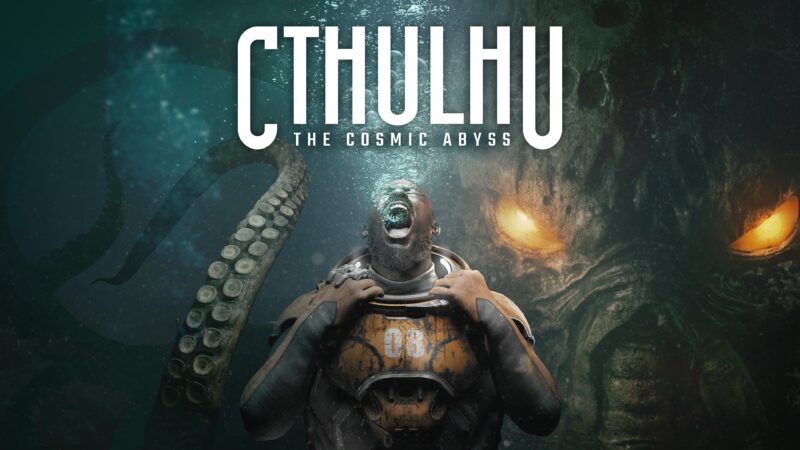
We at Rely not too long ago had the chance to interview Nicolas Garcia, the composer for Cthulhu: The Cosmic Abyss. On the time of this interview, he knowledgeable us he was in Croatia for the Crystal Pine Award, the place the sport gained the award for Greatest Unique Rating – Video Recreation, competing in opposition to titles corresponding to Hades 2, Ghost of Yotei, and Sword of the Sea. Congratulations to Nicolas! Our interview assisted us in understanding his thought course of and exactly what led to the sport successful the accolade.
ROH: The oppressive ambiance in Cthulhu: The Cosmic Abyss feels deeply intertwined with its soundscape, nearly as if the audio itself is actively working in opposition to the participant’s sense of consolation. If you first approached the undertaking, what was your guiding philosophy for creating that slow-burning unease?
At first of the undertaking, we had fairly a number of conferences with Dorian Pfister (Audio Director) to calibrate the ambiance as exactly as doable. If the music is simply too uncomfortable, gamers may flip the amount down, and conversely, if we didn’t push far sufficient into discomfort, we ended up with music that didn’t serve its objective. I subsequently labored on a number of fronts directly: ambiguous harmonies, lengthy and floating dissonances to encompass the participant and mirror what one may really feel throughout the Abyss, in addition to artificial sounds created by means of resynthesis, rougher, extra unstable. We additionally established sonic “codes” tied to particular themes and chapters, to construct a gradual and coherent descent into the abyss, chapter by chapter.
ROH: One of the fascinating particulars you revealed in regards to the sport’s manufacturing was the usage of a submerged subject recorder inside a sealed water barrel for underwater sequences. Are you able to stroll us by means of how that concept happened, and what these recordings added sonically that conventional digital results couldn’t?
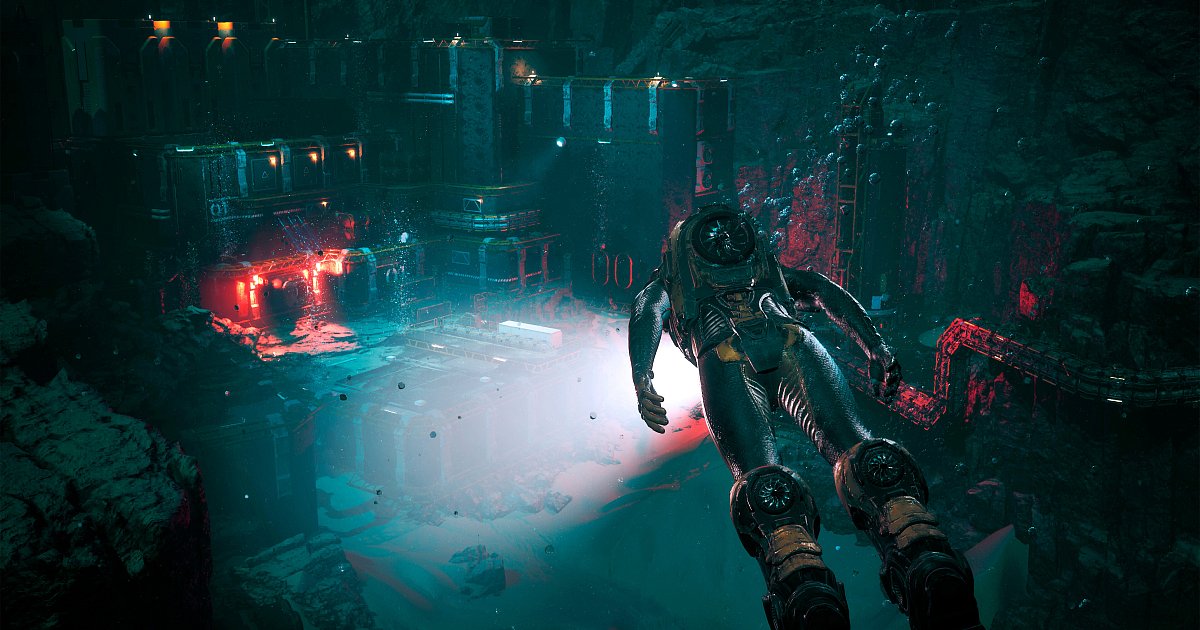
The concept got here whereas watching a gameplay sequence from chapter 2. I believed aquatic percussive sounds could possibly be fascinating, and I remembered a barrel in my backyard I had used for a cement mixer. I began experimenting: a number of recording classes, various water ranges, a transportable recorder sealed inside a water-proof field, which was a bit nerve-wracking, as I actually didn’t wish to harm it, and two microphones positioned on the surface. As soon as the setup was prepared, I examined every kind of objects to strike, rub, and scrape the barrel at totally different spots. I actually love that form of sonic exploration, getting my palms soiled. There are most likely business libraries that might have supplied one thing related, however what issues to me is having a novel sonic palette created particularly for the sport. That uncooked high quality of the recording genuinely contributes to the ambiance, somewhat than utilizing a sound anybody can entry.
ROH: Cosmic horror typically depends on the concern of the unknowable, which will be tough to translate into music with out changing into overwhelming or melodramatic. How did you stability restraint and escalation all through the rating?
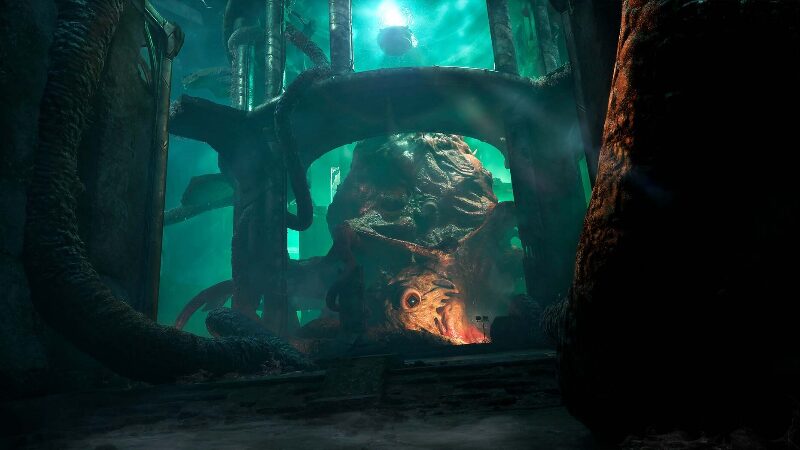
Restraint was the important thing from the very starting. Leaning too laborious on dissonance or orchestral swells suggestions you into melodrama, which breaks precisely the impact you’re after. I labored in very gradual, nearly imperceptible layers, so the participant wouldn’t fairly know when the discomfort had set in. This descent can be mirrored within the orchestration itself: within the opening chapter and the sport’s intro, the textures are largely carried by the orchestra, one thing extra natural. Then, progressively, the synthesizers take over, resulting in items like Be part of Us, that are fairly intense and overwhelming. Lovecraftian cosmic horror is above all about what can’t be seen, what can’t be understood, and the music needed to mirror that: counsel somewhat than assert. The harmonies typically stay suspended, unresolved, as if the participant had been sinking into one thing irreversible.
ROH: Using the carnyx as a recurring subliminal factor is such an uncommon and impressed selection. What drew you to that particular instrument, and the way did you combine one thing so historical into a contemporary psychological horror soundscape with out it feeling overt or distracting?
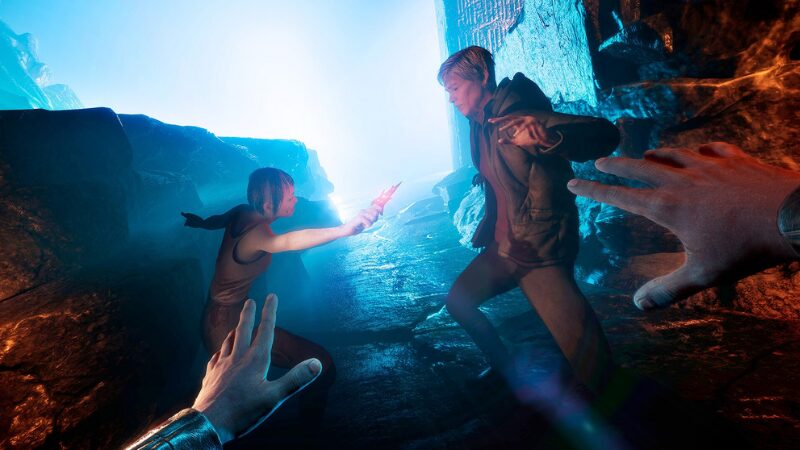
I used to be on the lookout for an instrument able to conveying one thing each historical and authentic. After quite a lot of analysis, I got here throughout the carnyx, and I used to be fortunate: there was a carnyx maker and participant simply two and a half hours from me, Samuel Méric. I had performed The Name of Cthulhu tabletop roleplaying sport as a youngster, and I wished to create a form of recurring name all through the rating, the decision of Cthulhu, in a way. It’s an instrument that’s each historical and restricted: with out valves, the participant can solely depend on the pure harmonic sequence, with a number of extra semitones accessible by means of particular enjoying methods. That constraint offers it a really singular character. Within the sport, it’s used subtly, typically within the background, from The place Are You, when Noah and Elsa are trying to find Mei within the basement in chapter 1, all the way in which to the tip. To mix it into the psychological horror soundscape, I labored on reverb and spatialization to maintain it diffuse and distant, extra of an ornamental presence than an assertive voice.
ROH: How intently did the rating and environmental sound design evolve alongside each other throughout growth? Did you method them as separate disciplines, or extra as a unified psychological software meant to form the participant’s emotional state?
Dorian had a transparent imaginative and prescient of the environmental sound design from the beginning, which made the collaboration fairly pure: both he would transient me on what the sound design would come with, or the crew would adapt the sound design to the music. This prevented any battle and allowed us to construct a really crafted and immersive sonic expertise. The 2 disciplines had been conceived collectively, as a single unified psychological software.
ROH: Lovecraftian horror has been tailored numerous occasions throughout video games and movie, however The Cosmic Abyss feels notably targeted on dread somewhat than sudden terror. Had been there any composers, movies, or experimental audio works that influenced your method to sustaining pressure over lengthy stretches of gameplay?
Alien (1979) was a serious affect, and notably Jerry Goldsmith’s rating, constructed totally round concern and the virtually invisible, but surprisingly compelling, presence of the creature aboard the ship. Simply earlier than I began composing, I had additionally seen Alien: Romulus (2024) with Benjamin Wallfisch’s rating, which I liked, particularly the atonal vocal results. Krzysztof Penderecki additionally performed an vital function in my method to long-held tensions and aleatoric string methods. I might additionally add György Ligeti, whose micropolyphonies create that sense of infinite and threatening house that felt very proper for the cosmic abyss.
ROH: Did engaged on Cthulhu: The Cosmic Abyss require you to experiment with any unconventional recording strategies or devices past the submerged recordings and the carnyx? If that’s the case, had been there any discoveries that shocked even you throughout manufacturing?
I recorded fairly a number of uncommon devices for this undertaking. A citole, a medieval instrument constructed by French luthier Philippe Berne, who added frets and barely rounded the nut so it could possibly be performed with a bow. I used it for the Dagon zone (Dagon’s Horror on the soundtrack), the bowed citole tracks truly disappear whenever you enter the bloodied water, then reappear whenever you resurface. I additionally used a guqin, a Chinese language instrument usually performed by plucking, which I bowed all through the rating as properly. For Hydra, a zither struck with mallets, to offer an archaic really feel. A didgeridoo so as to add harmonics and energy within the low finish, and for R’lyeh, a gembri G3, additionally constructed by Philippe Berne.
ROH: After spending a lot time establishing this sort of suffocating, psychologically invasive ambiance, do you are feeling that horror video games demand a basically totally different compositional mindset in comparison with different genres?
Sure, profoundly. In most genres, and notably in movie music, melody tends to be the driving power, not less than in my method. It evolves, transforms, returns all through the rating as an emotional thread. Right here we did the identical factor, however with textures. It’s the texture that shifts, thickens, descends alongside the participant. There are after all melodic themes, such because the Yith themes, with passages that come nearer to conventional cinematic scoring, however they continue to be islands inside an ocean of sonic matter. In psychological horror, music should precede the emotion, instilling it earlier than the hazard is even seen, which requires accepting that you’re not there to “please” within the standard sense. This undertaking taught me to actually belief silence, and the absence of clear melody, as an expressive software in its personal proper.
We beforehand reviewed the sport, stating, “If there’s one space the place Cthulhu: The Cosmic Abyss constantly excels, it’s its audiovisual presentation. The sport builds a dense and oppressive ambiance that usually feels extra impactful than any direct menace.” Cthulhu: The Cosmic Abyss is out there now on PC by way of Steam, PlayStation 5 and Xbox Collection.

