


Regardless of the way you take a look at loss of life, it’s laborious to see it as a contented occasion. Nonetheless, some cultures attempt to show that it’s potential to have fun even in these circumstances, primarily to honor, keep in mind, and cherish those that have handed away. The obvious instance is the Day of the Useless in Mexico (in Spanish: “Dia de los Muertos”), additionally celebrated in different international locations, primarily within the Americas.
With creepy costumes and traditions which will appear unusual to an outsider, it’s no shock that it’s additionally one of many scariest holidays on the world calendar right now – which explains why you, horror followers, ought to find out about its causes, habits, and first influences.
What Is The Day Of The Useless?
Day of the Useless is a Mexican vacation, a part of the Catholic celebrations held in reminiscence of deceased household ancestors.
Opposite to our preliminary intuition about loss of life, the vacation is meant to be a joyful and vigorous celebration of reminiscence, custom, and nostalgia, considerably paying homage to Halloween in america.
When Is The Day Of The Useless?
The vacation is well known yearly on the 1 and a pair of of November to honor family members who handed away. Nonetheless, some localities embrace different dates within the celebration, like October 31 and November 6.
The place Is The Day Of The Useless Celebrated?
It is very important observe that the vacation just isn’t solely celebrated in Mexico but in addition in numerous Central American international locations. It’s celebrated primarily in international locations with Mexican minorities, some South American international locations, the Caribbean islands, and extra.
The Day Of The Useless Historical past And Origin
The roots of the Day of the Useless are deeply rooted in Mexico’s pre-Columbian historical past. The traditional cultures within the nation, such because the Aztec tradition or the Mayans, held ceremonies in honor of the useless for hundreds of years. The Aztecs, for instance, celebrated a competition devoted to the goddess of the useless, Mictēcacihuātl, which additionally included ceremonies in reminiscence of the deceased. The Aztecs noticed the vacation as a part of the cycles of nature and, subsequently, selected to have fun it initially of August, the normal time of the corn harvest.
Within the fifteenth century, Mexico was conquered by the Spanish conquistadors, and numerous religions arrived within the nation. At this level, it was essential to mix the normal customs of the natives with those who got here with the conquerors, particularly regarding Christianity and the Catholic motion. At this level, it was determined to unite the celebrations of the useless with different important holidays celebrated in Catholic Christianity on these dates: All Saints’ Day (November 1), devoted to Christians who died resulting from their faith and artwork, and All Souls’ Day (November 2), which incorporates rituals, prayers and feasts to commemorate the useless.
In 2008, UNESCO acknowledged the Day of the Useless as a part of the Intangible Cultural Heritage of Humanity (ICH), additional rising the significance of the vacation and making it extra extensively recognized in international locations exterior the Americas. A number of vital cultural texts contributed to this, however we’ll get to that later.
House Altars, Breads And Sweets: The Primary Habits Of The Mexican Day Of The Useless
The Day of the Useless has numerous customs and traditions, a few of which differ from area to area in Mexico and different international locations that remember the vacation. A central precept is that the vacation combines parts from the native custom of the precise nation or area alongside trendy or much more common symbols.
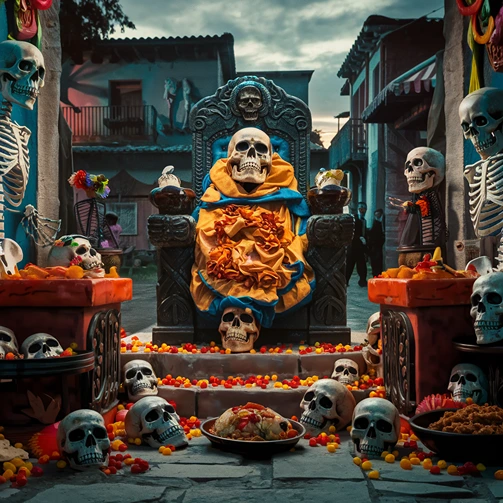
On Mexican Day of the Useless, households go to cemeteries and church buildings geared up with flowers, candles, favourite meals, or private belongings of the deceased. Some households arrange residence altars (often called “ofrendas”) at burial websites or of their houses, cleansing the graves and spending a sure period of time close to them, from a number of hours to an entire evening.
The record of particular choices for the deceased can embrace flowers -Particularly marigolds, recognized in Spanish because the “Flowers of Loss of life.” The locals consider that marigolds summon the ghosts of the useless due to their robust scent and vivid orange hue. Different choices are tequila bottles, sweets, and toys (for youngsters). One of many beliefs that explains these selections is that the smells of the meals and flowers could entice the souls of the useless again to the world of the dwelling.
Day of the Useless celebrations mix a number of conventional dishes. “Bread of the Useless” (Pan de Muerto) is a candy native pastry that appears like a bun with a twist: it is baked in a approach that resembles “rolls,” which, in accordance with organic jargon, are the bones that make up the skeletons of the fingers and toes. The bread is baked in honor of the vacation to commemorate the useless, positioned on altars, and eaten as an integral a part of the celebrations.
Kids certainly die (metaphorically) for the Calaveras – colourful skull-formed sweets and candies, typically with the names of the useless on their backs. They’re distributed and eaten by adults and younger individuals alike, regardless of (and maybe as a result of) the emphasis on their look and fewer on the style or the selection of high quality components.
The vacation additionally contains fairly a number of drinks, primarily alcoholic ones. Prior to now, it was quite common to herald the normal Mexican alcoholic drink Pulque. In the present day, many households select to “go along with it” with no matter their useless would have appreciated to drink.
Day Of The Useless Costumes: When the Vacation Turns into A Visible Celebration
With all due respect to the traditions surrounding the Day of the Useless in Mexico, important as they might be, there is no such thing as a doubt that from an goal viewpoint, one of many highlights is that the vacation is spectacular in its magnificence.
It begins with the normal decorations used, similar to colourful and delicately carved paper (Papel Picado), which symbolizes, amongst different issues, the delicate aspect of life. 12 months after yr, we get completely different “Western” parts, additionally impressed by Hollywood, and the result’s greater than only a “Mexican model of Halloween.”
La Calavera Catrina
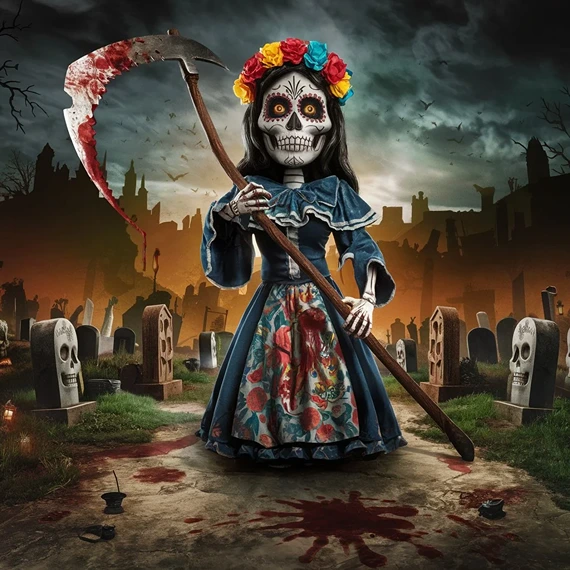
Many cities maintain colourful parades and festivals throughout the vacation, which embrace conventional costumes. One of the vital of those is the costume of the “The Dapper [female] Cranium,” often called “La Calavera Catrina.” This character was first created as a zinc etching by the Mexican printmaker and lithographer José Guadalupe Posada within the early twentieth century as a part of a critique of girls within the higher social class – as will be deduced from the truth that the skeletal girl is elegant in her apparel, which incorporates, amongst different issues, a Victorian costume and a flowery hat.
In 1946-1947, Mexican muralist Diego Rivera upgraded Posada’s preliminary work, remodeling it right into a full-scale determine he positioned in his fresco (right now, you may see it within the museum named after him). Rivera considerably diminished the visible significance of the determine, which had change into a nationwide image of Mexico.
The Dapper [female] Cranium is especially related to the Day of the Useless and has change into an emblem of Mexican id for a lot of. Alongside this well-known character, you’ll find quite a lot of different Day of the Useless costumes, similar to “common” skeletons, with a twist in some instances (similar to colourful clothes or colourful apparel). The record of costumes can also embrace native mythological figures, historic figures, and Mexican celebrities, such because the well-known artist Frida Kahlo.

Mexican Day Of The Useless Make-up: A Central Half Of The Expertise
We can’t ignore the Day of the Useless make-up kinds and strategies, which typically combine with the costume or as a replacement. You could find all kinds of guides on-line, written or filmed, that can clarify precisely how one can create make-up that corresponds to the visible side of the Day of the Useless.
The principle purpose of Day of the Useless make-up is to mirror the concept loss of life is a pure a part of life in a considerably ironic approach and to emphasise the sweetness and colorfulness of the vacation. You possibly can see this in parts similar to:
💀 Cranium make-up: face portray of a white cranium, with black parts, primarily across the eyes and mouth
💀 Flowers and numerous decorations, which can be colourful
💀 Stitches, primarily within the lip space
💀 Shades: use of robust and vivid shades, similar to purple, orange, and purple, to embellish the face (alongside black and white, in fact)
💀 Vivid parts, similar to small gems or “glitter”
Mexican Day Of The Useless In Western Tradition
Mexican Day of the Useless has change into a well-liked theme in international standard tradition, particularly cinema. We are able to discover references in numerous genres: typically on the stage of a single scene and typically at an much more pronounced stage, similar to a whole animated movie that focuses on the custom of the Day of the Useless and builds an thrilling story round it. Sadly, many of the cultural texts we’ll check with right here aren’t from the world of horror, however one can all the time hope for modifications.
Animated movies are cinema’s most important illustration of the Day of the Useless. You possibly can perceive why: it’s a colourful vacation that appears nice on the display and contains customs that talk (additionally) to the world of kids.
Listed here are some notable Day of the Useless animated films:
Coco (2017)

Pixar’s wonderful animated movie “Coco” might be mainstream cinema’s most well-known and widespread illustration of the Day of the Useless. The movie received the Oscar for Greatest Animated Movie and Greatest Unique Track, in addition to the Golden Globe.
“Coco” follows Miguel, a Mexican boy who by chance enters the world of the useless on the day of the vacation. Miguel goals of turning into a musician, however his household is towards making his dream come true. When Miguel discovers that his grandmother has damaged his guitar, he breaks into the mausoleum of his favourite musician (and, in his perception, one of many household patriarchs), “borrows” the guitar and enters the Island of the Useless. In line with native custom, this occurs as a result of one can’t steal from a useless individual on the Day of the Useless. Miguel realizes that if he doesn’t obtain the longed-for blessing from one in all his relations, he’ll stay caught on the planet of the useless endlessly. The result’s shifting, maybe even too advanced for youngsters and youngsters.
“Coco” presents in nice element the customs and traditions of the vacation whereas emphasizing the significance of reminiscence and household in Mexican tradition. It additionally teaches us one thing in regards to the achievement of goals and private will.
Corpse Bride (2005)

Though Tim Burton’s masterful animated movie “Corpse Bride” just isn’t straight in regards to the Day of the Useless, it is largely based mostly on the aesthetics and concepts of the vacation. The movie presents a colourful and vigorous world of the useless, much like the Mexican idea. The colourful and musical skeleton characters are paying homage to Mexican tradition’s festive method to loss of life.
Not surprisingly, the movie contains skeletons and different characters that match properly with the visuals of the Mexican Day of the Useless—for instance, a reference to the well-known Skeleton Dance.
The E-book Of Life (2014)
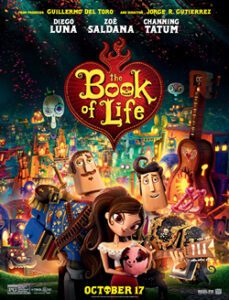
“The E-book of Life” is a Fox animated movie that focuses straight on the Day of the Useless and its mythology within the type of a fairy story a trainer tells her college students on a bus on an annual journey. The movie presents a magical fairy story, the central plot of which is a bullfighter who goes on an journey after his loss of life, partly to satisfy the expectations of his household and family members on the Day of the Useless.
“The E-book of Life” highlights the vacation’s distinctive aesthetic, emphasizing intricate designs and wealthy particulars based mostly on Mexican custom.
From James Bond To The Crow: Motion And Crime Movies
If Mexico reminds you of against the law movie, chances are you’ll be overgeneralizing. Nonetheless, it’s undoubtedly one of the harmful international locations on the planet, as evidenced by the info displaying that it has the fourth highest crime price within the nation.
A number of movies have taken it a number of steps additional, with notable scenes set across the Day of the Useless. The opening scene in “Spectre,” the twenty fourth James Bond movie, takes place throughout the Day of the Useless, at a festive procession in Mexico Metropolis. Within the bombastic scene, our pretty Bond (Daniel Craig), carrying the normal skeleton masks, makes use of a woman to trace an Italian prison. The scene contains some nice photographs, most notably a monitoring shot that exhibits all of the enjoyable happening within the metropolis. By the best way, Mexico Metropolis didn’t have a big parade like this earlier than the movie, however as a result of demand the movie generated, it is claimed that since then, they’ve been cautious to carry exhibitions of this sort.
Among the plots of assorted crime movies, even profitable ones, happen across the Day of the Useless in Mexico. “Blood In Blood Out” (1993) follows three brothers in a Mexican household – a tormented and drugged artist, a prison, and a police officer – and features a scene of a violent coup in a jail on the Day of the Useless.
Robert Rodriguez’s tedious “As soon as Upon a Time in Mexico” (2006), starring Antonio Banderas, Salma Hayek, and Johnny Depp, additionally features a coup in its storyline across the Day of the Useless.
“The Crow: Metropolis of Angels” (1996), the sequel to “The Crow,” was produced within the shadow of the trauma of the loss of life of actor Brandon Lee on the set of the primary movie. The plot right here is ready in Los Angeles, as you might need guessed from the title, however it offers with the celebrations surrounding the Day of the Useless. The plot of “The Crow: Metropolis of Angels” facilities on a father and son who witness the homicide of members of a drug gang however are themselves murdered consequently. The daddy returns from the useless to take revenge, because the Crow, in fact.
The recognition of those movies has led to elevated curiosity within the customs and aesthetics of the vacation exterior of Mexico. A transparent proof is the rise within the reputation of Day of the Useless-style costumes and make-up at Halloween celebrations worldwide and the incorporation of vacation parts into artwork and design. The issue is that these modifications can even simplify or “over-romanticize” a deep and sophisticated custom. Due to this fact, it is important to grasp the whole cultural and historic context of the Day of the Useless past its cinematic representations.
Day Of The Useless Horror Motion pictures
As is our custom, it’s time to look at how horror cinema has addressed the parable surrounding the Day of the Useless. The disappointing information is that we haven’t discovered many important references in horror cinema as of this writing.
George Romero’s wonderful 1985 zombie movie “Day of the Useless,” the third within the zombie movie collection (after “Evening of the Dwelling Useless” (1968) and “Daybreak of the Useless” (1978)), is known as after the vacation however doesn’t check with it. Some say they regarded for all types of phrases they might mix with the phrase “Of the Useless” and selected “Day of the Useless.”
So, which Day Of The Useless horror films are nonetheless on the market?
3 From Hell (2019)
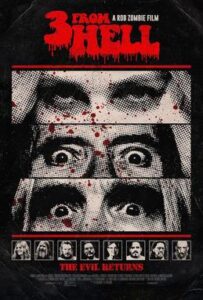
Rob Zombie’s loopy movie “3 From Hell,” the third within the Firefly trilogy (after “Home of 1,000 Corpses” and “The Satan’s Rejects”), begins with the information that the members of the loopy household survived the shootout with the police. They arrive on the jail, two of them escape, and finally, the third one. They flee, cross the border, and are available to a small Mexican city throughout the Day of the Useless celebrations. The fellows slot in properly with the celebration, together with native escort ladies. The issue is that there’s somebody there who acknowledges them and tries to delay them so that somebody who desires to kill them can come and kill them.
Right here is likely one of the essential scenes of “3 From Hell,” which takes place on the Day of the Useless:
Potent Media’s Sugar Cranium Women (2016)

A number of comparatively insignificant horror movies relate intently to the Day of the Useless. “Potent Media’s Sugar Cranium Women” from 2016 is a comparatively unknown movie with a low price range and poor high quality, as you may deduce from its sloppy poster and trailer, from the truth that you most likely haven’t heard of it and from its score on IMDB: a bit of greater than 2.5 out of 10, after a bit of greater than 150 scores revamped virtually a decade.
The plot of “Potent Media’s Sugar Cranium Women,” if I acquired it proper (I’m not one of many 150 fortunate horror followers to price this movie,) focuses on a failed try to resurrect a bit of lady from the useless. The failed try causes three demonic sisters to reach from the “different aspect” and do all types of low-budget issues.
All Souls Day: Dia De Los Muertos (2005)
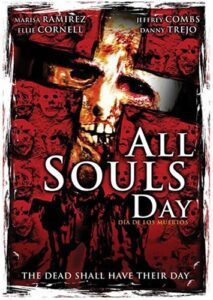
The 2005 Mexican horror movie “All Souls Day: Dia de los Muertos” is (barely) higher recognized to most people, however its high quality additionally appears problematic. The movie facilities on a zombie assault on the Day of the Useless. A younger couple who arrive in a small city within the nation encounter a human sacrifice ceremony, a part of the native custom that’s presupposed to please the traditional gods. From right here to the mass exodus of the useless from their graves, the highway appears brief.
Please comply with and like us:

