


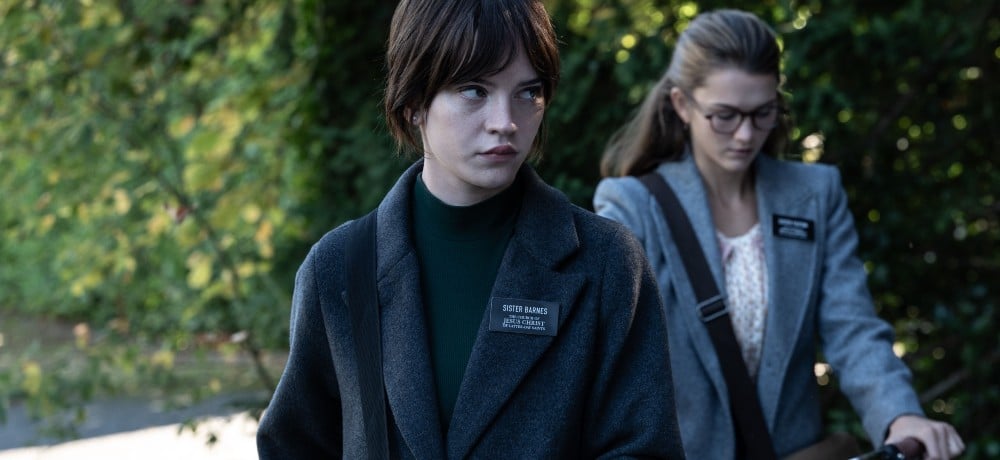
[Editor’s Note: This article discusses Heretic in detail, including spoilers.]
The primal concern of the human physique itself—not ghosts, not demonic presences—haunted me after watching Heretic (2024). Physique horror, with its grotesque parade of morphing flesh, decomposition, and unnatural transformation, holds up a visceral mirror to remind us: metamorphosis is terrifying as a result of it’s uncannily relatable. Horror doesn’t simply lurk within the shadows; it festers, blooms, and erupts from inside.
This seems like the right time to usher in “The Abject,” a time period Julia Kristeva launched in Powers of Horror (1980). Kristeva describes it as “the human response (horror, vomit) to a threatened breakdown in that means brought on by the lack of the excellence between topic and object or between self and different.” A high-concept thought, positive, however let’s make it easy: think about peeling an apple and discovering human flesh beneath the pores and skin. That gut-churning unease? That’s The Abject! The second when the boundaries between YOU and what’s inside you begin to dissolve. Now, ramp up the discomfort: what if what’s inside is itself monstrous?
And that is the place issues get actually fascinating (and deeply unsettling). Let’s speak about ladies’s our bodies. Traditionally shrouded in thriller, even in the present day, with all our medical developments and cutting-edge analysis, there’s a lot we don’t absolutely perceive about them. And what we don’t perceive? Properly, we concern. Worry, in spite of everything, is usually simply ignorance dressed up in anxiousness.
Mary Russo calls this the “Deep Damp Invisibility” of girls’s reproductive organs, a phrase that appears like one thing pulled from a gothic novel however completely captures how a lot about feminine biology stays obscured or willfully ignored. However there’s one other layer: ladies’s our bodies, in all their fluidity, messiness, and perceived unpredictability, have lengthy represented all the things patriarchal buildings search to regulate: ache, vulnerability and transformation. And but, paradoxically, these identical qualities provoke concern. Why? As a result of they problem the neat, sterile classes society likes to impose: power vs. weak spot, self vs. different, topic vs. object. Briefly, ladies’s our bodies are The Abject. And nothing is extra terrifying than what refuses to be neatly outlined.
So, once we return to Heretic, we’re not simply witnessing physique horror as spectacle; we’re confronting deep-seated cultural anxieties about our bodies, particularly those we’re most afraid to know. Horror, in spite of everything, has all the time been a language for what we dare not say aloud. And with Heretic, it doesn’t simply whisper—it screams.
In Heretic (2024), ladies don’t merely endure; they decompose, remodel, and mutate into one thing terrifyingly different. Their our bodies, stripped of autonomy, caged, and left to rot, aren’t simply grotesque for the sake of horror aesthetics. They’re strolling (or, extra precisely, collapsing) embodiments of deeper fears, carrying centuries of patriarchal baggage. The movie stitches Catholicism and horror collectively seamlessly, exposing the true “one true faith” at play: concern. And, actually, isn’t that essentially the most becoming pairing? Faith has lengthy been obsessive about purging what Julia Kristeva calls The Abject—that messy, liminal house the place boundaries blur between self and different, sacred and profane, human and monster.
Take, as an example, the second a supposed “prophet of God” is about to be resurrected. Her decayed physique, a crumbling relic of religion, is paraded as each divine spectacle and grotesque warning. The ritual meant to revive her holiness solely amplifies the horror of her flesh: fragile, rotting, undeniably human. And that’s the true terror, isn’t it? That no quantity of divine intervention can save us from the decay written into our biology. Heretic forces us to take a seat in that discomfort, making us watch as religion collides head-first with the inevitability of the physique’s breakdown.
However Heretic doesn’t simply present us physique horror; it makes us query why it unsettles us within the first place. Girls’s our bodies have all the time been cinematic battlegrounds, wielded to evoke lust, concern, and disgust, generally all of sudden. Right here, the movie turns that custom on its head, difficult why deviations from the so-called “regular” feminine physique provoke such visceral reactions. The horror isn’t simply within the transformations; it’s within the deeply ingrained anxieties that make these transformations really feel monstrous to start with.
Nowhere is that this extra harrowing than in Heretic’s last act, the place ladies—caged like animals, starved of meals and water—are left to decompose, with their our bodies hollowing into skeletal husks. It’s a scene that unsettles not only for its grotesque visuals however for what it represents: absolutely the annihilation of autonomy, the perversion of religion right into a weapon, and the brutal actuality of our bodies diminished to mere struggling vessels. The picture of rotting, imprisoned ladies is a bleak metaphor for a way patriarchal buildings decide the price of girls’s our bodies: controlling them till they’re deemed “ineffective” and discarding them with no second thought. It faucets into age-old anxieties round feminine growing old and desirability, the place ladies who not serve reproductive or sexual capabilities are systematically erased, ignored, or vilified.
However, Heretic doesn’t cease at easy bodily horror, it warps the very act of wanting. In a darkish twist on conventional scopophilia, the movie forces its imprisoned ladies to turn into each the objects of horror and its unwilling spectators. Trapped collectively, they’re condemned to observe each other decay, every lady’s struggling mirrored again at her within the our bodies of these round her. Horror cinema sometimes positions ladies below the male gaze, however, right here, the gaze is inescapable, internalized, and weaponized. They’re stripped of privateness, company, and even the small mercy of wanting away, reworking into dwelling omens of their very own destiny. This pressured voyeurism deepens the psychological horror, making certain that struggling is just not solely endured, however witnessed in actual time.
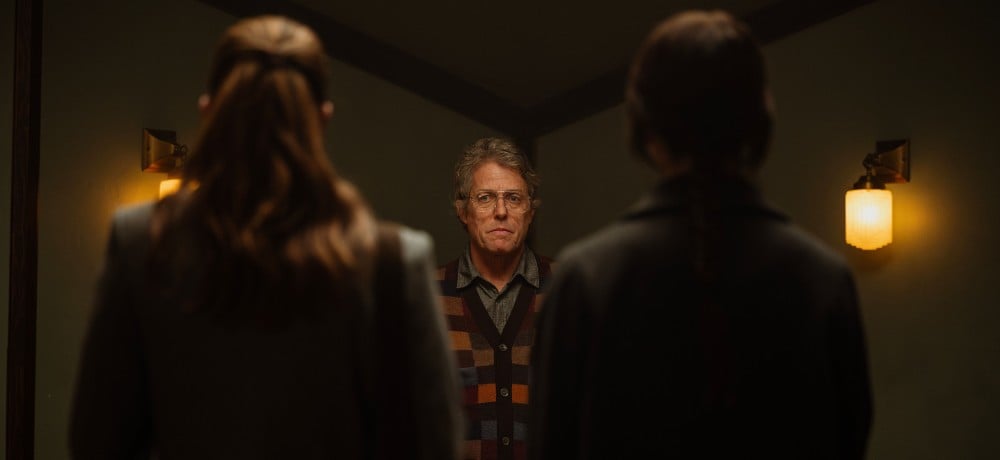
This stands in stark distinction to how male transformations are sometimes framed in physique horror. Movies like The Fly (1986) or Tetsuo: The Iron Man (1989) current grotesque bodily mutations, however, for males, these modifications ceaselessly include energy: mental, mechanical, supernatural. Even when tragic, their transformations carry an undercurrent of company or evolution. Girls’s transformations, then again, have a tendency to indicate degradation, punishment, and the lack of management, whether or not it’s The Brood (1979), Carrie (1976), or Contracted (2013). Their our bodies turn into monstrous, not as a way of transcendence, however as a type of struggling, ethical reckoning, or social condemnation, reinforcing long-held patriarchal fears of feminine autonomy.
By rejecting the concept of bodily transformation as empowerment, Heretic lays naked the gendered horror of the flesh. It forces us to confront the uncomfortable fact: ladies’s our bodies are sometimes solely valued after they conform to particular, societally-approved requirements, whether or not of youth, magnificence, or perform. The second they deviate, they stop to be seen as human in any respect, reworking into one thing monstrous, disposable, and abject. However Heretic doesn’t simply exploit this concern, it holds a mirror to it, making us stare immediately into the cultural anxieties which have formed it.
Why does this trope hold resurfacing? Easy: it forces us to confront the large, ugly questions- who controls ladies’s our bodies? How are they seen? As sacred vessels of life? Symbols of purity? Or one thing monstrous after they break the mildew? And when these anxieties fester, the place do they leak out? Proper into our media. Heretic seizes this unease and filters it by means of the lens of Catholicism, the place the stress between the divine and the corporeal is as previous because the doctrine itself.
Julia Kristeva’s idea of the abject, the liminal horror that exists between self and different, turns out to be useful right here. The abject is that which was as soon as a part of us, however is now expelled, one thing that triggers each disgust and concern. It’s why bodily fluids, decay, and transformation make us recoil. And if there’s one factor horror loves, it’s the abject. Girls’s our bodies, particularly, have lengthy been framed this fashion: too unpredictable, too leaky, too tied to the terrifying mysteries of replica. Religions, particularly these with strict purity doctrines, have spent centuries making an attempt to include, cleanse, or outright reject this messiness. Catholicism, with its obsession with sin and sanctity, is the right playground for such fears. Heretic doesn’t simply enjoy physique horror, it interrogates why now we have traditionally revered and reviled the feminine physique in equal measure.
However at its core, Heretic is a movie about transformation, of our bodies, of identities, of religion itself. Change is unsettling as a result of it reminds us of life’s elementary instability. By presenting bodily horror not simply as a grotesque spectacle however as a meditation on mutation and decay, the movie forces us to ask: why does transformation frighten us a lot? Heretic doesn’t simply need to scare you, it desires to make you sit with the discomfort of that query. And possibly, simply possibly, notice that the horror isn’t simply within the flesh, however in what we challenge onto it.
Physique horror has all the time occupied a captivating, uneasy house inside feminist horror research, particularly relating to the way it disrupts the ‘male gaze’ as outlined by Laura Mulvey. Historically, ladies’s our bodies in horror movies exist at two extremes: hypersexualized objects of need or grotesque websites of punishment. Heretic refuses to play by these guidelines. As an alternative, it weaponizes expectation, rejecting the cinematic norms that render feminine struggling as both erotic spectacle or empty shock. The movie doesn’t simply current the feminine physique, it transforms it into one thing that terrifies, revolts, and resists.
On the coronary heart of Heretic is an interrogation of organic transitions—menstruation, childbirth, menopause—every a pure course of, but traditionally framed as one thing monstrous. These transformations have lengthy been handled with suspicion, their visibility policed, their realities medicalized or outright vilified. Menstruation, for instance, has ceaselessly been depicted as an indication of corruption, an entry level into monstrous femininity (Carrie [1976] being essentially the most well-known instance). Being pregnant, too, has lengthy been a staple of physique horror, usually portrayed as a violation, an invasion of the physique by one thing overseas, uncontrollable (Alien [1979], The Brood [1979], Inside [2007]). Heretic leans into these fears, however refuses to easily exploit them. As an alternative, it forces us to query why the womb itself is so usually framed as horrifying, each in fiction and in broader cultural narratives.
After which there’s menopause, the ultimate transformation, and one which horror has traditionally handled with a special type of dread. Growing older ladies are sometimes rendered invisible; their our bodies seen as unsettling, not simply because they modify, however as a result of they lose their culturally ascribed ‘worth.’ Heretic doesn’t sanitize this course of or disguise from it. It confronts the grotesque nature of bodily change head-on, daring its viewers to take a look at what they’d reasonably ignore.
By doing so, Heretic doesn’t simply be part of the lineage of horror movies that problem passive victimhood, it sharpens its enamel on it. It refuses to merely depict violence towards ladies’s our bodies; it turns the digital camera again on the viewer, demanding they confront why such violence has been normalized, even consumed as pleasure. The true horror, Heretic suggests, isn’t simply what occurs on display screen—it’s the historical past of who’s been watching.

