


Upstate New York is a lovely place, particularly for a scary story. From Washington Irving’s Legend of Sleepy Hole to the Quiet Place collection, the horror style’s most visually vivid tales are sometimes advised among the many Empire State’s many mountains, valleys, rivers, and lakes.
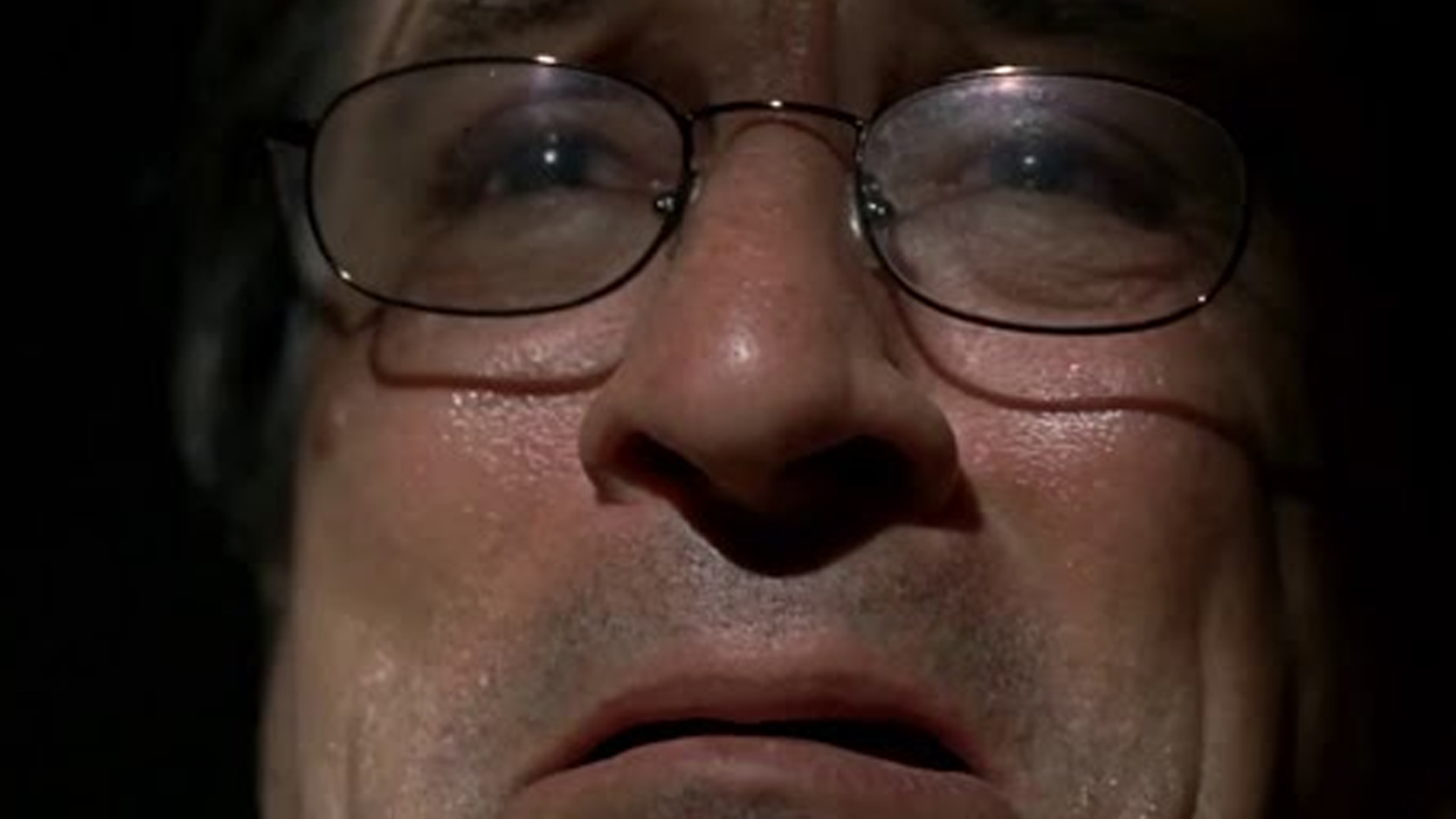
Into this verdant area falls Conceal and Search, an obscure 2005 thriller starring Robert De Niro, Dakota Fanning, and Elisabeth Shue that turns 20 this month. Whereas it will not be broadly remembered at this time, I’ve a robust private attachment to it as a result of I noticed it in theaters as a sophomore school scholar in upstate New York. My Bard School classmates and I overtly speculated in regards to the movie’s much-ballyhooed twist ending. One in all them, the kid of a studio govt, defined how 20th Century Fox had distributed prints to theaters with out the ultimate reel to keep away from leaking spoilers. That technique in the end proved sensible, because the extremely worthwhile Conceal and Search grossed greater than $127 million on a $30 million funds.
Like most audiences (however not like esteemed critic Roger Ebert), I too was shocked by the ending. Certainly, my response to the finale has formed my views on critiquing cinema ever since. It’s right here that I need to submit a spoiler alert, as I can’t clarify both the underrated greatness of Conceal and Search or my drawback with its ending sans revealing the twist.
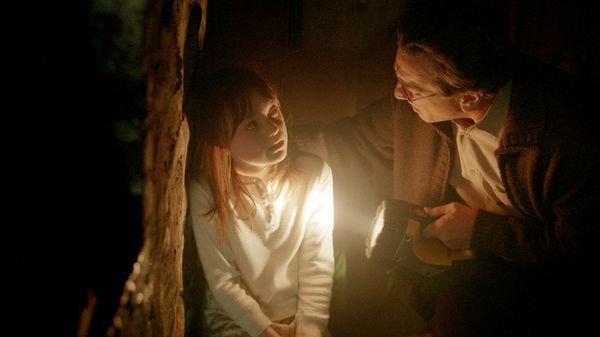
The premise of Conceal and Search sees psychologist Dr. David Callaway (De Niro) transfer to upstate New York together with his daughter Emily (Fanning) after each are traumatized from the seeming suicide of their spouse/mom Alison (Amy Irving). For a lot of the film, we consider they’re being terrorized by Emily’s imaginary buddy Charlie, who could possibly be both a supernatural entity or one of many many “strangers” wandering across the neighborhood. Charlie murders the household cat, David’s new girlfriend Elisabeth (Shue), and a nosy sheriff (Dylan Baker). But ultimately, we uncover “Charlie” was truly David all alongside—or, extra exactly, an alternate persona created by David. The movie implies he developed dissociative id dysfunction (DID) after discovering Alison cuckolding him (he later killed her and faked her suicide).
All of this paints the truth of DID and residing with it in an inaccurate and disparaging mild. The analysis seems, immediately and not directly, in horror and thriller motion pictures like Id, Secret Window, My Bloody Valentine, and The Ward. Individuals who have DID possess two or extra distinct personalities which may have their very own distinctive names, histories, and traits. Normally developed as a coping mechanism for extreme trauma, folks with DID usually undergo from nervousness, despair, reminiscence gaps, self-destructive habits, and even suicidality. Emphatically, they’re no extra susceptible to violence than the remainder of the inhabitants.
I used to be dismayed. Only some years earlier I had been recognized as autistic, and from that day on fiercely recognized with the budding neurodiversity motion. It was and nonetheless is controversial whether or not DID ought to be “formally” deemed a neurodivergent situation, however as a result of folks with DID face stigmas on account of their neurological variations, I argued (and nonetheless do) that they deserved the allyship of neurodiverse folks no matter any label.
After I defined all of this to my fellow Bard college students, they agreed with me. Bard had a repute on the time as America’s most liberal school (I had been labeled “conservative” by some fellow college students the earlier yr for supporting first Joe Lieberman after which John Edwards for president within the 2004 Democratic primaries), and a number of other within the group prompt I write an article in our school newspaper “The Bard Observer” blasting Conceal and Search.
I made a decision in opposition to it as a result of, regardless of disliking features of the ending, I nonetheless loved the film. Whereas the time period “cancel tradition” didn’t but exist as a phrase for ostracizing an individual or entity for being problematic, the scholars nonetheless understood the idea. Extra troublingly, each certainly one of them on the evening we noticed Conceal and Search agreed that if I felt the ending was ableist, I couldn’t in good conscience advocate the film.
Though I appreciated director John Polson’s potential to seize the texture of upstate New York, loved Ari Schlossberg’s intelligent script, and thought De Niro and Fanning gave characteristically incredible central performances, my mates wouldn’t budge. I even noticed that Conceal and Search gives layered and life like portrayals of psychological well being issues just like the trauma of witnessing violence and the trauma of being cuckolded, in addition to explores essential points like little one abuse and poisonous masculinity. My friends remained unmoved.
A lot to my subsequent remorse, I in the end determined to not write the assessment in any respect. It simply didn’t appear to be well worth the hassle. On reflection, I ought to have defended the film’s robust writing, performing, and cinematography, whereas declaring my reservations in regards to the conclusion’s implications for folks with DID. (In fact, I might have additionally included a spoiler alert.) Maybe most significantly, I might have tried to articulate that one can level out how dangerous stigmas are perpetuated in artworks whereas nonetheless appreciating their worth.
Whereas I didn’t make that case on the time, I carried the incident with me by my subsequent writing profession, particularly as a movie critic. After I disliked depictions of psychological well being and neurodiversity in different motion pictures, I attempted to strike a steadiness between calling out the unsuitable depictions and emphasizing that I used to be not advocating outright cancelation. I did this when the film itself was good, corresponding to M. Night time Shyamalan’s 2016 thriller Break up, and I did it when an image’s total high quality was as horrible as its science, like with Sia’s 2021 drama Music.
On the previous event, I even expressed hope the great film would have a sequel (which it in the end did), and on the latter, I wrote of the unhealthy film that “for all of its faults, I don’t get the sense that Sia made this film with hate in her coronary heart, and due to this fact I don’t see Sia, her collaborators or the film itself as deserving of the last word type of cultural sanction.”
Though Conceal and Search didn’t obtain “the last word type of cultural sanction” (cancellation), it has fallen into obscurity within the 20 years since January 2005. Extra regrettably, it has an abysmal Rotten Tomatoes critics’ rating of 12% (50% among the many viewers), suggesting a poor repute I think about undeserved. I hope to someday stay in a world the place each Conceal and Search is ranked alongside the perfect works of De Niro and Fanning, and characters with DID and different neurological variations are recurrently proven in popular culture as three-dimensional protagonists as a substitute of mere ciphers for villainousness and deviance. Since I would not have DID, I can’t speculate as to which popular culture samples may function examples of optimistic representations. As an autistic individual, nevertheless, I proceed to battle to seek out three-dimensional representations, and I’m not alone in feeling this manner.
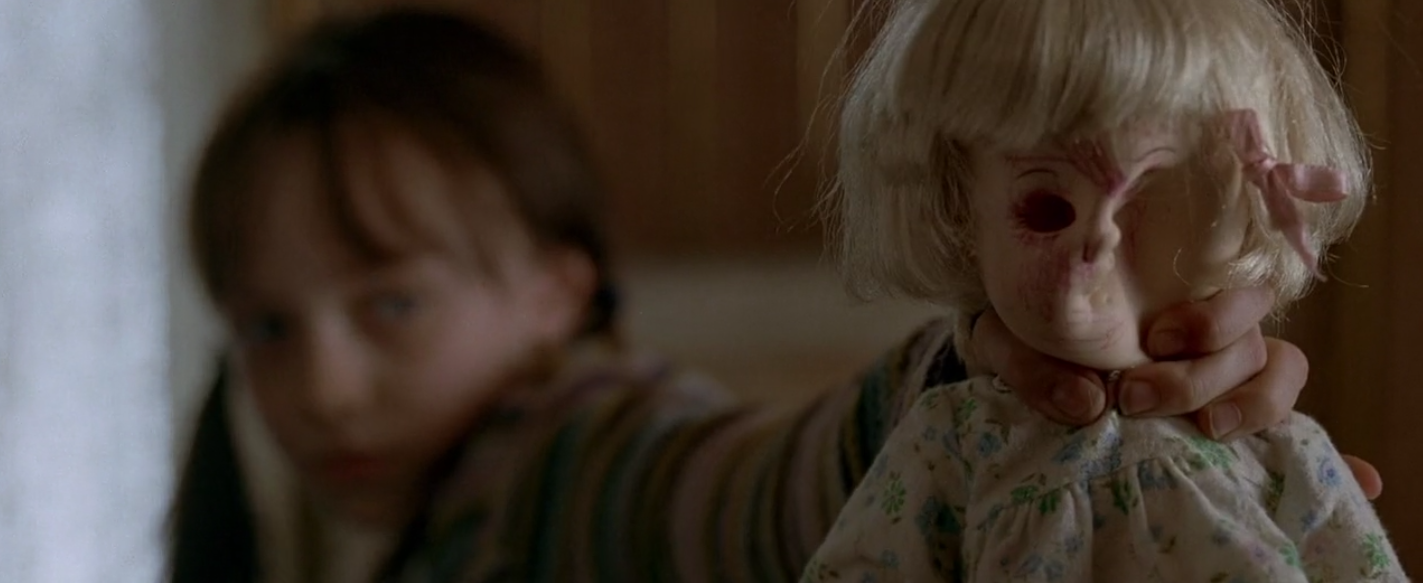
My views are epitomized by Conceal and Search’s a number of alternate endings. After David is killed and Emily is rescued by his former scholar Katherine (Famke Janssen), the viewers learns in 4 of the 5 endings that Emily inherited her father’s DID; the fifth merely reveals Katherine and Emily fortunately strolling away from their new house. Of the opposite 4 endings, the conclusions solely range from one another in how Emily’s psychological sickness is revealed. Relying on the model, it’s both proven by Emily residing in a psychiatric ward (there are two variations of this), Emily enjoying hide-and-seek together with her reflection in a mirror, or Emily drawing herself having two heads.
Whereas the joyful ending feels compelled, the opposite 4 endings all work fairly nicely on an inventive degree. Additionally they suggest that psychological sickness and neurodiversity are curses that may be handed alongside, akin to another horror style monster. Irrespective of which one you decide, the great and the unhealthy are inextricably intertwined.
That is Conceal and Search in a nutshell. One can say that it is usually true of the complexity of the human thoughts, no matter whether or not it exists inside our personal skulls or splattered into the surface world as a murals.
Categorized:Editorials