


There’s something faintly embarrassing about explaining why we love horror. We are able to gown it up within the language of literary criticism, invoke the chic, the uncanny, the return of the repressed, or the Gothic creativeness. We are able to discuss in regards to the historic anxieties of the nineteenth century, the destabilization of the self, or the collapse of rational certainties. All of this can be completely true. And but, ultimately, we discover ourselves admitting that we relatively like a superb haunting.
The query is why one haunting relatively than one other.
Why does one reader return compulsively to Frankenstein, whereas one other prefers Dracula? Why does one discover Henry James’s The Flip of the Screw an inexhaustible psychological puzzle, whereas one other would relatively spend a night with the railway signalman of Charles Dickens’s ghost story? Why do a few of us discover H. P. Lovecraft’s imaginative and prescient of cosmic insignificance surprisingly exhilarating, whereas others want the intimate, virtually home terrors of M. R. James?

Style isn’t a dependable information to character, in fact. Anybody who claims to deduce your total character out of your favourite novel might be promoting one thing, and probably sporting a waistcoat. Nonetheless, our literary attachments usually are not completely arbitrary. We return to sure tales as a result of they offer form to anxieties we acknowledge, dramatize questions we can not settle, or provide imaginative permission to entertain emotions we might relatively not acknowledge in well mannered firm.
Horror is especially revealing on this respect. It asks us to sympathize with monsters, ponder forbidden data, mistrust our personal perceptions, and picture what may occur if the peculiar world turned out to be ruled by guidelines we had by no means understood. The tales we love could inform us much less about what frightens us than about how we want to confront the horrifying.
So contemplate the next a speculative train in literary psychology. Not a diagnostic instrument, definitely, and never a listing of sorts into which readers might be conveniently sorted. Consider it as an alternative as a cupboard of doable selves, every ready patiently at the hours of darkness.
I. If You Love Frankenstein, You Might Establish With and Have Compassion for Outsiders
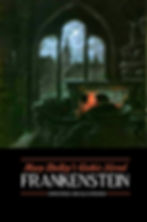
Mary Shelley’s Frankenstein (1818) is commonly handled because the definitive cautionary story about scientific ambition. That is cheap, offered we do not forget that Victor Frankenstein’s nice failure is just not merely that he meddles with nature. It’s that he brings one thing into the world after which refuses to take care of it.
The excellence issues. Victor’s creature doesn’t start because the embodiment of wickedness. He begins as a profoundly susceptible being, hungry for companionship, instruction, and recognition. His eventual violence is inseparable from his expertise of rejection, though it can not merely be excused by it. The novel affords no simple division between harmless sufferer and responsible monster. Its tragedy depends upon our incapacity to keep up one.
If Frankenstein is your favourite horror novel, maybe you’re drawn to exactly this ethical complication. You believe you studied that probably the most consequential evils usually are not all the time dedicated by individuals who want evil. Typically they come up from self-importance, cowardice, indifference, or the conviction that an endeavor has been accomplished when its penalties have barely begun.
You might also possess a robust intuition for the deserted. The creature’s eloquence makes his distress tough to dismiss, and his creator’s eloquence makes it tough to dismiss him, both. You have an interest within the area between clarification and excuse, the place ethical judgment turns into uncomfortable with out turning into not possible.
There’s a much less flattering chance. Maybe you establish with Victor himself: the one that desires to realize one thing extraordinary however would favor to not be inconvenienced by the folks affected by the achievement. The novel is a superb corrective to the fantasy of genius as a solitary enterprise. Victor desires the glory of creation with out the obligations of parenthood.
Both method, Frankenstein appeals to readers who suspect that duty begins exactly the place our grand concepts finish.
II. If You Love The Sandman, You Might Be Unsettled By the Concept of Being Unable to Belief Your Senses

E. T. A. Hoffmann’s The Sandman (1816) belongs to that unsettling class of tales through which the supernatural could also be actual, psychological, or each—and through which the excellence turns into much less comforting the longer we look at it.
Nathanael fears the sinister Coppelius, associates him with the folkloric Sandman, and turns into fascinated by the mysterious Olympia. His perceptions are repeatedly entangled with reminiscence, childhood terror, romantic obsession, and the opportunity of mechanical life. The story’s energy lies partly in its refusal to allow us to stand securely exterior his predicament.
Sigmund Freud would famously make The Sandman central to his 1919 essay on the uncanny, deciphering its anxieties by way of the determine of the threatened or misplaced eye. However the story’s psychological richness extends past any single interpretation. Nathanael is frightened not merely as a result of the world could include one thing monstrous, however as a result of he can not set up with confidence what sort of world he inhabits.
Should you love this story, you might be unusually delicate to the instability of appearances. You take pleasure in fiction that makes notion itself suspect, the place the acquainted turns into sinister with out essentially altering its outward type. You may mistrust simple explanations, although you ought to be warned that skepticism can turn into its personal sort of obsession.
You might also be drawn to the peculiar intimacy of childhood fears. Essentially the most horrifying factor about Nathanael’s story is just not that he encounters a monster in maturity, however that maturity by no means fairly releases him from the monster he knew as a toddler.
There may be, maybe, slightly of Nathanael in anybody who has ever stared at an peculiar object lengthy sufficient for it to turn into faintly menacing. The distinction is that almost all of us finally activate one other mild.
III. If You Love The Flip of the Screw, You Might Benefit from the Thrill of Chaos and Uncertainty

Henry James’s The Flip of the Screw (1898) is an unusually efficient check of a reader’s urge for food for uncertainty. Are Peter Quint and Miss Jessel real supernatural intruders? Are the youngsters complicit in some horrible secret? Is the governess perceiving what others refuse to acknowledge, or imposing a monstrous interpretation upon ambiguous circumstances?
The novella offers us a narrator whose sincerity is just not essentially doubtful, however whose reliability stays open to query. These are various things, although readers incessantly confuse them. An individual could report an expertise actually whereas misunderstanding what it means.
If that is your favourite ghost story, you most likely benefit from the mental discomfort of incomplete proof. You might be prepared to entertain competing interpretations with out demanding that the creator settle each query. You might even discover the demand for a definitive reply faintly vulgar, like asking a portray to elucidate its symbolism earlier than you have got completed it.
You might be additionally, maybe, extra within the human thoughts than in ghosts themselves. The apparition is vital, however so is the consciousness by way of which it reaches us. What does the governess see? What does she worry? What does she have to consider about herself and the youngsters in her care?
The hazard for readers of this sort is that interpretive ingenuity can turn into an finish in itself. Given ample ambiguity, one can assemble an elaborate clarification for nearly something, together with the creator’s supposed intention to forestall us from establishing elaborate explanations.
Nonetheless, The Flip of the Screw rewards the willingness to stay suspended between prospects. Should you adore it, you might acknowledge that uncertainty is just not all the time an issue to be solved. Typically it’s the very substance of the expertise.
IV. If You Love Dickens’s “The Sign-Man,” You Might Worry the Nervousness of Being Out of Management

Dickens’s “The Sign-Man” (1866) is a masterpiece of restrained supernatural dread. Its setting is nearly aggressively unromantic: a railway reducing, a lonely sign field, a tunnel, and a person whose duties require him to observe for hazard. There aren’t any crumbling castles or ancestral curses. There may be solely a employee at his publish, haunted by a determine whose appearances appear to precede catastrophe.
The story’s emotional middle is just not merely the chance that the signalman has glimpsed a ghost. It’s the horrible inadequacy of warning. He sees one thing he can not clarify, believes that it portends disaster, and can’t decide how you can reply. His skilled duty turns into inseparable from his helplessness.
If that is your most popular sort of horror, you might be particularly delicate to the tragedies of peculiar life: the missed sign, the unanswered message, the dialog that comes too late. You perceive that terror needn’t contain the destruction of the world. Typically it consists of watching a catastrophe strategy whereas missing the means to forestall it.
You might also be temperamentally attentive to patterns. The thoughts is constructed to attach occasions, to acknowledge repetitions, to deduce which means from coincidence. That college is indispensable to survival, however it might probably turn into tormenting when the sample seems to foretell one thing we can not change.
The signalman is horrifying as a result of his isolation is each literal and existential. He occupies a place of duty, but his data can not save him. Those that love the story could also be drawn to this specific contradiction: the will to guard others coupled with the humiliating discovery that vigilance has limits.
It’s a deeply trendy worry, even in a Victorian railway reducing. Now we have acquired extra refined warning techniques since Dickens’s time. Now we have not essentially turn into any higher at bearing what they inform us.
V. If You Love Dracula, You Might Imagine Civilization Is Extra Weak Than It Pretends

Bram Stoker’s Dracula (1897) is commonly approached as a novel about sexual repression, international invasion, or Victorian anxieties about modernity. It’s all these items, amongst others, however it is usually a celebration of organized resistance.
Depend Dracula is historical, affected person, and terribly tough to kill. His opponents, against this, should coordinate railway timetables, decipher paperwork, trade letters, function cameras and phonographs, and belief each other’s testimony. The novel’s heroes don’t defeat superstition by abandoning trendy data. They mix trendy expertise with older ethical and non secular commitments.
If Dracula is your favourite, you might be interested in the spectacle of intelligence beneath strain. You respect a narrative through which braveness is just not the other of thought, and through which folks overcome their limitations by pooling their data. You might also benefit from the pleasure of seeing an apparently invincible evil confronted by a bunch of people that refuse to just accept that it’s invincible.
There’s a social dimension to this choice. Not like the remoted consciousness of The Flip of the Screw, Stoker’s novel distributes its data amongst a number of characters.
No particular person possesses the whole fact. The answer emerges by way of cooperation, even when the members are frightened, mistaken, or emotionally compromised.
Maybe you’re, at coronary heart, an institutional optimist: somebody who believes that communities, traditions, and shared obligations can accomplish what remoted brilliance can not.
Or maybe you merely take pleasure in a superb expedition, a well-stocked arsenal, and the satisfaction of seeing a bunch of pros take an issue severely. There may be nothing improper with that. One needn’t be embarrassed by the attraction of competent folks doing tough issues collectively.
Nonetheless, the novel’s triumph is just not completely uncomplicated. Its victory depends upon a inflexible distinction between those that belong to the neighborhood and the outsider who threatens it. Loving Dracula could due to this fact reveal not solely your religion in solidarity but in addition your curiosity within the boundaries by which solidarity defines itself.
VI. If You Love Unusual Case of Dr Jekyll and Mr Hyde, You Might Suspect That Respectability Is a Fragile Achievement

Robert Louis Stevenson’s Unusual Case of Dr Jekyll and Mr Hyde (1886) affords the flattering chance that our worst impulses usually are not actually us. They’re separate, removable, and probably containable. Jekyll can benefit from the freedom of Hyde with out accepting the complete burden of being Hyde. The novel then proceeds to destroy this comforting association.
Jekyll’s tragedy is just not merely that he discovers evil inside himself. It’s that he tries to evade duty for it by treating ethical character as a technical drawback. He imagines that he can separate want from conscience, indulge one with out damaging the opposite, and return to respectability each time handy.
Should you love this novella, you might be fascinated by the gap between public identification and personal urge for food. You perceive that persons are not all the time most harmful after they lose management. Typically they’re harmful after they consider they’ve developed an ingenious system for controlling exactly what shouldn’t be indulged.
You might also possess a wholesome suspicion of ethical self-congratulation. The respectable gentleman is just not essentially higher than the brute; he could merely have more practical strategies of concealing his brutality.
But there’s an interesting fantasy right here, too. Hyde embodies a liberation from social constraint, an escape from the exhausting work of sustaining appearances. It’s simple to grasp why readers may discover the chance enticing earlier than remembering that Hyde’s freedom is bought at different folks’s expense.
The novella asks whether or not self-knowledge is sufficient to make us virtuous. Jekyll is aware of what he’s doing, at the least for a time. His failure lies not in ignorance however in his refusal to just accept the implications of what he is aware of.
If that is your favourite, you might suspect that probably the most harmful lies we inform usually are not these we inform others. They’re the reasons we invent to protect our favorable opinion of ourselves.
VII. If You Love The Image of Dorian Grey, You Might Need Magnificence to Be Harmless—and Know It Is not
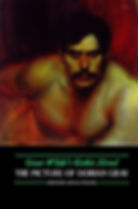
Oscar Wilde’s The Image of Dorian Grey (1890; revised in 1891) is a novel about magnificence, affect, corruption, and the peculiar temptation to deal with one’s life as a murals.
Dorian’s portrait data the ethical penalties that his face refuses to show.
He stays outwardly untouched whereas the portray accumulates the proof of his degradation. The association offers him a unprecedented benefit: he can expertise the pleasures of wrongdoing with out instantly confronting its seen price.
For a time, this appears virtually enviable. Who has not wished to flee the results of an unwise resolution, a merciless comment, or a egocentric indulgence? Wilde makes that fantasy stunning sufficient to turn into harmful.
Should you love Dorian Grey, you might be interested in the strain between aesthetic expertise and ethical judgment. You resist the concept that magnificence have to be respectable, edifying, or helpful. You respect artwork’s capability to unsettle the classes by which individuals set up their lives.
You might also be unusually alert to efficiency. Dorian is just not merely a person who commits sins; he’s a person who turns into more and more preoccupied with the looks of himself, with the story he tells and the impression he leaves. His best horror is the rising impossibility of protecting the inward actuality and outward picture aside.
There’s a much less comfy interpretation of this choice. Maybe you’re drawn to the fantasy of escaping accountability whereas retaining admiration.
Maybe the portrait appeals as a result of it performs the ethical accounting that Dorian himself would favor to keep away from.
Wilde’s novel doesn’t require us to resign magnificence. It asks us to contemplate what occurs after we demand that magnificence absolve us from every little thing else.
The reader who loves Dorian Grey could due to this fact be somebody who desires artwork to be harmful, life to be stunning, and the connection between the 2 to stay unresolved. That is an admirable mixture, offered one remembers that an exquisite excuse continues to be an excuse.
VIII. If You Love The Phantom of the Opera, You Might Imagine That Magnificence and Monstrosity Are Uncomfortably Shut Collectively

Gaston Leroux’s The Phantom of the Opera (serialized in 1909–1910 and revealed as a novel in 1910) combines Gothic romance, theatrical spectacle, thriller, and psychological horror in a narrative about a unprecedented artist who lives beneath the Paris Opera Home.
Erik, the Phantom, possesses exceptional musical and architectural abilities, however his disfigured face and more and more violent obsession with the younger soprano Christine Daaé have pushed him right into a secret existence beneath the world he longs to enter.
The novel’s emotional complexity depends upon the uncomfortable relationship between Erik’s struggling and his cruelty. He’s a sufferer of rejection, a person whose look has made peculiar affection and social acceptance tough to acquire. But he’s additionally manipulative, possessive, and able to terrifying violence. His want for Christine is inseparable from his want to manage her, and his inventive genius does nothing to ensure his ethical goodness.
Should you love The Phantom of the Opera, you might be particularly delicate to the struggling of individuals whom society finds tough to take a look at. You perceive that bodily look can form the alternatives folks obtain, the affections they’re permitted to expertise, and the identities they’re inspired to inhabit. You might be drawn to tales that ask whether or not a monster turns into monstrous by way of some important defect or by way of the collected penalties of exclusion, humiliation, and loneliness.
There’s a hazard, nonetheless, in figuring out too utterly with Erik. His struggling explains a lot about him, however it doesn’t give him possession of Christine’s life. The novel’s tragedy relies upon partly on the excellence between eager to be liked and believing that love might be obtained by way of coercion. Erik longs for recognition, tenderness, and companionship, however he repeatedly makes an attempt to safe them by denying Christine the liberty to decide on him.
You might also be interested in the novel’s theatrical creativeness. The Opera Home is a world of masks, disguises, secret passages, hidden rooms, and performances through which appearances might be manipulated.
Erik’s underground area is each a literal refuge and a distorted model of the general public world above. He creates a personal kingdom through which he can train the inventive authority denied to him elsewhere, however his mastery of that kingdom can not provide the peculiar human intimacy he lacks.
Maybe you benefit from the fantasy of the misunderstood genius: the extraordinary particular person whose presents are too uncommon, whose feelings are too intense, and whose creativeness is just too highly effective for peculiar society to accommodate. There’s something compelling about the concept that the individual everybody fears could possess depths of feeling that nobody has bothered to find.
The much less flattering interpretation is that you could be be drawn to the romance of struggling itself. Erik’s anguish offers him an virtually operatic grandeur, and his eloquence could make his possessiveness appear extra sympathetic than it will seem in a much less stunning narrative. It’s simple to confuse the depth of a personality’s emotions with the legitimacy of the actions these emotions encourage.
Leroux’s novel resists that confusion, even because it exploits the emotional prospects that make it tempting. Erik might be pitied with out being absolved. Christine can really feel compassion for him with out owing him romantic affection. And wonder, whether or not inventive or bodily, doesn’t settle the query of character.
If The Phantom of the Opera is your favourite, you might be fascinated by the boundary between sympathy and give up. You wish to perceive what makes somebody monstrous, however you aren’t essentially prepared to fake that understanding removes the hazard.
There may be, maybe, a contact of theatricality on this choice. You want your anguish extravagant, your secrets and techniques architectural, and your romantic problems accompanied by an orchestra. Strange heartbreak is unhealthy sufficient; there isn’t any purpose to not give it a subterranean lake and an impressive chandelier.
Nonetheless, the novel’s deepest horror lies within the chance that an individual can possess extraordinary presents, endure real injustice, and stay chargeable for the struggling he inflicts upon others.
The masks could conceal a face that society has taught us to worry. It doesn’t essentially conceal a saint.
IX. If You Love H. G. Wells’s The Invisible Man, You Might Fear About What Individuals Would Do With out Penalties

In H. G. Wells’s The Invisible Man (1897), scientific discovery turns into a method of social and ethical disintegration. Griffin acquires the facility to maneuver unseen, however the achievement doesn’t make him wiser, kinder, or extra able to dwelling with different folks. It offers his current impulses a brand new and harmful freedom.
The premise is nearly irresistibly revealing. What would we do if we may act with out being noticed? The query is humorous till we start answering it actually.
Wells is especially good at exposing the hole between extraordinary capacity and peculiar character. Griffin possesses data that ought to encourage marvel, but he’s additionally useless, resentful, and more and more violent. His invisibility doesn’t create these traits from nothing. It removes a number of the restraints that may in any other case have saved them in test.
Should you love this novel, you might have an interest within the ethical penalties of energy. You believe you studied that the vital query a few new functionality is just not merely what it makes doable, however what kind of individual is probably going to make use of it.
You might also benefit from the novel’s refusal to romanticize the solitary genius. Griffin imagines that he has transcended the peculiar situations of society. In actuality, he stays depending on meals, shelter, clothes, cash, and different folks. He has escaped visibility with out escaping want.
There’s a political dimension to this choice, too. The invisible man is an unsettling fantasy of energy with out accountability, a determine who can intrude with the lives of others whereas evading their judgment. His invisibility resembles the privilege of anybody who can impose penalties on others with out having to expertise them personally.
Maybe you take pleasure in The Invisible Man since you consider that energy reveals character. Or maybe you take pleasure in it as a result of you have got often imagined what you may get away with if no one may see you.
The novel is just not particularly enthusiastic about letting us really feel superior to Griffin. It’s enthusiastic about making us look at the fantasy earlier than it turns into a coverage.
X. If You Love “The Rats within the Partitions,” You Might Suspect That Civilization Has a Basement

H. P. Lovecraft’s “The Rats within the Partitions” (1924) begins with a well-known Gothic proposition: an outdated home comprises secrets and techniques. Delapore restores an ancestral property in England, solely to find that the constructing’s hidden historical past is significantly extra appalling than its structure suggests.
The story’s descent into the previous finally reveals a household legacy of atrocity, subterranean horrors, and the disturbing persistence of ancestral corruption. Its protagonist discovers that the respectable floor of his identification conceals one thing far older and extra horrible.
If that is your favourite Lovecraft story, you might be interested in the horror of inheritance. You believe you studied that people are formed by histories they neither selected nor absolutely perceive. Households, establishments, and nations could domesticate noble public narratives whereas concealing foundations they would favor to not look at.
You might also respect horror through which the setting turns into a bodily expression of the thoughts. The ancestral home is just not merely a backdrop. Its partitions, corridors, and hidden depths embody the distinction between the story a household tells about itself and the fact beneath that story.
The attraction is just not essentially a style for pessimism. It might as an alternative be a refusal of complacency. The reader who loves this story is prepared to entertain the chance that the previous is just not safely previous, that its penalties stay lively even when its particulars have been forgotten.
There may be, nonetheless, an vital distinction between acknowledging inherited guilt and treating ancestry as future. Lovecraft’s fiction typically turns historic and cultural anxieties into troubling racial essentialism. A considerate reader needn’t settle for these assumptions so as to respect the story’s Gothic structure of concealment and discovery.
Maybe you’re keen on “The Rats within the Partitions” as a result of it means that probably the most horrifying factor a few home is just not what has entered it from exterior, however what has been dwelling beneath all of it alongside.
The metaphor, sadly, extends relatively nicely past actual property.
XI. If You Love “The Monkey’s Paw,” You Might Be Frightened of the Implications of “Be Cautious What You Want For”

W. W. Jacobs’s “The Monkey’s Paw” (1902) is a small, completely engineered tragedy. A talisman grants three needs, however the needs deliver struggling relatively than satisfaction. The story’s horror emerges from the collision between peculiar human longing and a mechanism whose guidelines can’t be safely negotiated.
The Whites don’t start as villains or fools. They’re an peculiar household. Their needs are comprehensible, even modest. The primary want is for cash; the results flip that cheap request right into a disaster. What follows is an try to make use of the identical energy to restore the harm it has triggered.
Should you love this story, you might be drawn to the ethical limits of management. You acknowledge that wanting one thing sincerely doesn’t imply understanding what acquiring it will entail. You might be suspicious of options that promise to get rid of grief, uncertainty, or dependence with out exacting a value.
You might also have a robust attachment to the peculiar home world. The story’s terror depends upon the truth that the Whites’ residence initially appears secure. Their tragedy is just not the destruction of an extravagant ambition however the corruption of acquainted hopes: monetary safety, household happiness, reduction from struggling.
There’s a wry chance that you just mistrust bargains that sound too good to be true. This isn’t a nasty intuition. Horror fiction has been warning us about suspiciously beneficiant affords for hundreds of years, often with higher outcomes than the precise economic system.
However the story’s deepest unease lies elsewhere. The Whites can not merely abandon their longing as soon as they uncover its risks. Their grief makes the temptation to want once more virtually insufferable.
If “The Monkey’s Paw” is your favourite, maybe you perceive that the human want to undo struggling could turn into extra harmful than the struggling itself. We’re not all the time prepared to just accept the bounds that shield us from our personal desperation.
XII. If You Love M. R. James, You Might Choose Your Terror to Have Glorious Manners

M. R. James’s ghost tales are sometimes praised for his or her restraint, however restraint is just not fairly the identical factor as gentleness. In tales equivalent to “Oh, Whistle, and I am going to Come to You, My Lad” (1904) and “Depend Magnus” (1904), the supernatural intrudes upon an orderly world of scholarship, journey, antiquarian curiosity, and respectable routines.
James’s protagonists are incessantly clever males who consider that data is a ample protection in opposition to hazard. They acquire manuscripts, examine outdated church buildings, look at curious objects, and pursue obscure historic questions. Their mental pursuits deliver them into contact with issues that don’t care how clever they’re.
Should you love James, you might be temperamentally hooked up to precision. You benefit from the suggestion relatively than the spectacle, the obscure reference relatively than the explanatory monologue. You perceive that the best horror usually depends upon withholding the very data that will permit us to really feel safe.
You might also respect the indignity of being frightened. James’s monsters are notably efficient as a result of they invade worlds whose inhabitants assume that civilized habits will shield them. There’s something virtually comedian a few scholarly gentleman discovering that the universe has not agreed to respect the conventions of his occupation.
The humor is important. James doesn’t want each ghost to symbolize a profound philosophical disaster. Typically an evil object is solely an evil object, and the suitable response is to cease dealing with it.
But beneath the comedy lies a severe warning about curiosity. Mental inquiry is efficacious, however it doesn’t assure immunity from what it discovers. Data can reveal hazard with out offering the means to manage it.
Should you love M. R. James, you might consider that the creativeness wants each skepticism and humility. You wish to examine the darkness, however you would favor to take action from a cushty chair, with a good fireplace and a locked door.
That is completely comprehensible. The locked door, as James repeatedly demonstrates, might not be a lot assist.
XIII. If You Love “The Wendigo,” You Might Worry What Occurs When the Wilderness Stops Being Merely a Place

Algernon Blackwood’s “The Wendigo” (1910) belongs to that notably unsettling custom of supernatural fiction through which the pure world turns into one thing far stranger than a backdrop for human journey.
The story follows a searching expedition into the Canadian wilderness, the place a sequence of disturbing occasions means that the occasion has encountered a presence that can’t be adequately defined by peculiar expertise.
Blackwood’s achievement lies in the way in which he transforms the wilderness from a bodily surroundings right into a problem to human understanding.
The forest is immense, the distances tough to understand, and the acquainted landmarks of civilization more and more distant. The expedition begins with the arrogance of males who consider they’ll enter the wilderness, discover it, and return with their experiences safely integrated into the peculiar world. Step by step, that confidence begins to look misplaced.
The mysterious Wendigo is horrifying not just because it could be a supernatural creature. It appears to embody a actuality so alien to peculiar human life that encountering it threatens to make acquainted assumptions in regards to the physique, identification, and the pure world abruptly insufficient.
The story’s most annoying episodes recommend a metamorphosis that’s concurrently bodily, psychological, and metaphysical. One thing has occurred to a human being, however the language accessible to elucidate it appears unable to maintain tempo with the expertise.
Should you love “The Wendigo,” you might be drawn to horror that makes human beings really feel genuinely small. You might be much less enthusiastic about a monster that may be measured, categorized, and defeated than within the chance that the world comprises forces whose existence renders our standard classes inadequate. You might discover the normal haunted home slightly too reassuring: at the least a home has partitions, doorways, and a fairly clear distinction between inside and out of doors.
You might also possess a robust attraction to solitude and wild locations, coupled with a wholesome suspicion of the romantic concept that nature exists primarily to revive the human spirit. Blackwood’s wilderness is gorgeous, however its magnificence doesn’t suggest benevolence. The forest doesn’t owe its guests consolation, comprehension, and even the courtesy of remaining understandable.
There’s a extra unsettling chance. Maybe you’re fascinated by the prospect of dropping the very qualities that make you recognizable to your self. The horror of transformation is especially efficient when it threatens not merely our security however our identification. To turn into one thing else is horrifying sufficient; to find that the transformation has carried you past the opportunity of explaining what you have got turn into is worse.
Blackwood’s story additionally rewards readers who respect supernatural horror that refuses to make each thriller manageable. The characters could try to interpret their experiences by way of folklore, commentary, or rational argument, however these strategies don’t essentially restore their sense of safety. The wilderness stays able to exceeding the reasons introduced into it.
A considerate reader must also acknowledge that Blackwood’s use of Indigenous legend belongs to the literary conventions of his interval, relatively than treating his fictional remedy as a definitive account of Indigenous beliefs. The story’s imaginative energy might be appreciated with out complicated its supernatural mythology with an authoritative ethnographic description.
Should you love “The Wendigo,” you might suspect that civilization’s confidence rests partly on our capacity to keep away from confronting what lies past its boundaries. You have an interest within the second when the acquainted world turns into unusual, and when the pure surroundings ceases to behave like a passive setting for human ambitions.
Maybe you merely take pleasure in a superb wilderness expedition. In that case, Blackwood affords a helpful reminder that the will to expertise one thing extraordinary is just not the identical as being ready for the expertise itself.
There are locations the place an individual can wander for days with out seeing one other human being. The disturbing query is whether or not, in such locations, we’re really alone.
XIV. If You Love The Legend of Sleepy Hole, You Might Suspect That the Greatest Monsters Are These We Create Collectively

Washington Irving’s “The Legend of Sleepy Hole” (1820) is likely one of the most enduring ghost tales in American literature, though its attraction has by no means depended completely on whether or not the Headless Horseman is actual. Set in a secluded Dutch-American neighborhood within the Hudson Valley, the story surrounds its supernatural legend with native gossip, rustic humor, romantic rivalry, and an virtually intoxicating sense of place. Its terror emerges from a world through which tales usually are not merely instructed however inhabited.
Ichabod Crane, the lanky schoolmaster who arrives in Sleepy Hole, is an outsider in practically each sense. He’s educated however gullible, formidable however socially awkward, and prone to the promise of wealth, good meals, and a cushty marriage. His rival, Brom Bones, possesses exactly the qualities Ichabod lacks: bodily confidence, native reputation, and an intimate understanding of the neighborhood’s customs.
When Ichabod encounters the Headless Horseman, we’re left to wonder if he has witnessed a real supernatural visitation, fallen sufferer to Brom’s elaborate prank, or just turn into the protagonist of a narrative whose particulars have been embellished by generations of native storytellers.
Should you love this story, you might be fascinated by the connection between worry and belonging. You perceive {that a} neighborhood’s legends do greater than entertain. They set up a shared imaginative world, distinguish insiders from outsiders, and supply a language by way of which individuals interpret experiences they can not completely clarify. The Headless Horseman is horrifying partly as a result of he’s a ghost, but in addition as a result of everybody already is aware of what he’s purported to be.
You might also possess a passion for the underdog, though Irving makes this identification slightly uncomfortable. Ichabod is hardly an easy sufferer.
His urge for food for Katrina Van Tassel encompasses her father’s appreciable property, and his romantic aspirations are inseparable from his want for social development. We are able to sympathize along with his humiliation with out pretending that he’s completely admirable. Brom, in the meantime, is a bully, however he’s additionally a charismatic native determine whose sensible jokes rely on an intensive data of the fears and expectations of his neighbors.
There’s a much less flattering chance. Maybe you merely take pleasure in watching an outsider uncover that intelligence, ambition, and self-confidence depend for little or no in a spot the place everybody else is aware of the principles. Ichabod’s downfall is especially satisfying in case you suspect that individuals who take themselves too severely often must be reminded that the world doesn’t revolve round them.
But the story’s enduring attraction is just not merely that an smug schoolmaster will get his comeuppance. Irving creates a panorama through which the supernatural appears to develop naturally from the customs, reminiscences, and storytelling habits of its inhabitants. Sleepy Hole turns into haunted as a result of its folks have made room for haunting of their understanding of the world.
Should you love “The Legend of Sleepy Hole,” you might consider that probably the most highly effective monsters usually are not essentially those that exist independently of us. Typically they’re those a neighborhood teaches us to worry, and typically probably the most horrifying factor a few ghost is that everybody else already is aware of its story.
There may be, nonetheless, one sensible lesson to be drawn from Ichabod’s expertise: when an area legend includes a headless rider, it could be clever to not problem the legend in your method residence after darkish.
XV. If You Love The King in Yellow, You Might Be Drawn to the Harmful Pleasure of Forbidden Artwork

Robert W. Chambers’s The King in Yellow (1895) is likely one of the most distinctive works of supernatural fiction produced within the late nineteenth century. Its first 4 tales revolve round a mysterious play whose second act exerts a devastating affect upon those that encounter it. The remaining tales transfer into totally different territory, together with romantic and inventive fiction, however the assortment’s status rests largely on the unnerving imaginative world established by its opening tales.
The fictional play is a very ingenious supply of horror as a result of its hazard lies much less in what readers can confidently say about it than in what they think it’d include. Its title, its mysterious symbols, and its associations with the Yellow Signal and the enigmatic determine of the King recommend a actuality that reaches past the peculiar world. But Chambers withholds sufficient data to maintain the mythology from turning into completely manageable. We glimpse a bigger design with out being permitted to look at it comfortably.
Should you love The King in Yellow, you might be interested in the concept that artwork might be harmful in ways in which have little to do with its specific material. You perceive {that a} e book, portray, or piece of music can alter the phrases by way of which somebody experiences actuality. Artwork doesn’t all the time reassure us, enhance our manners, or present a nice escape from every day life. Typically it modifications the questions we’re able to asking, leaving us unable to return to the assumptions with which we started.
You might also possess a robust attraction to thriller as an aesthetic expertise. You don’t essentially need each image defined, each historic reference recognized, or each supernatural occasion diminished to a coherent system. You benefit from the feeling {that a} murals extends past the bounds of what it reveals. Its omissions turn into a part of its which means, and the creativeness begins to provide prospects that the textual content itself by no means confirms.
There’s a psychological dimension to this choice. Chambers’s fictional play appears to show one thing that was already latent in its readers, though it additionally seems to introduce them to a disturbing new actuality. Its results blur the excellence between revelation and corruption. Does the play drive its readers towards insanity, or does it reveal that their current understanding of the world was by no means as safe as they imagined?
Should you love this assortment, you might be suspicious of the comfy assumption that data is all the time useful. You have an interest in discoveries that can’t be simply assimilated, in concepts that make peculiar existence seem abruptly synthetic, and within the chance that understanding one thing could come at the price of with the ability to dwell as you probably did earlier than.
There’s a much less flattering interpretation. Maybe you benefit from the romance of forbidden data as a result of it affords the flattering prospect of belonging to an elect minority. The mysterious textual content is harmful, however it is usually unique. To come across it’s to enter a circle of people that know one thing that others can not comprehend. The need to be initiated can turn into tough to tell apart from the will to be vital.
Chambers’s decadent environment encourages this temptation. His tales are stuffed with artists, elegant interiors, unusual symbols, and intimations of a hidden actuality beneath trendy society. Horror turns into inseparable from aesthetic fascination. We’re not merely frightened by the forbidden object; we wish to have a look at it once more.
The gathering additionally presents an fascinating complication for readers preferring their supernatural fiction to type a single, unified mythology. Its first 4 tales set up the environment of cosmic and psychological menace for which the e book is legendary, whereas the later tales shift towards extra standard romantic and inventive considerations.
The gathering is just not an easy novel about one supernatural thriller, and its unevenness is a part of its literary historical past. Its most influential imaginative parts however proved highly effective sufficient to encourage later generations of writers, particularly these enthusiastic about fictional books, forbidden revelations, and the horror of realities that resist human comprehension.
If The King in Yellow is your favourite, it’s your decision literature to do greater than frighten you. You need it to go away a residue, a picture or phrase that continues to bother the thoughts after the e book has been put away. You might want a thriller that expands the creativeness to at least one that merely rewards the answer of a puzzle.
The hazard, naturally, is that thriller can turn into an excuse for vagueness. An unexplained image is just not routinely profound, and an obscure murals is just not essentially a revelation. Chambers succeeds when his omissions generate a convincing environment of menace relatively than merely withholding data.
Maybe you’re keen on The King in Yellow since you suspect that the world is stranger than our peculiar descriptions permit. Or maybe you merely benefit from the prospect of encountering a e book that comes with a warning label.
Both method, there’s something revealing in regards to the want to strategy forbidden data whereas hoping to stay unchanged by it.
One may moderately conclude that the most secure course is to go away the mysterious play unread. Sadly, that recommendation is unlikely to fulfill anybody who has already turn into curious in regards to the Yellow Signal.
XVI. What If You Love All of Them?

There may be one last chance: you might refuse to decide on.
Maybe you’re keen on the ethical complexity of Frankenstein, the epistemological instability of The Sandman, the uncertainty of The Flip of the Screw, the social solidarity of Dracula, and the subterranean pessimism of Lovecraft. Maybe you end up sympathizing with the monster in a single story, the investigator in one other, and the one that has completely no intention of getting into the haunted home in a 3rd.
This isn’t essentially inconsistency. It might point out that you just perceive horror as a mode of inquiry relatively than a group of interchangeable scares.
The good horror tales of the interval from 1789 to 1929 don’t provide one unified principle of evil. They disagree about whether or not terror arises from human nature, supernatural actuality, social injustice, scientific ambition, inherited guilt, or the restrictions of notion. Some recommend that data will save us. Others recommend that data is exactly what places us in peril. Some discover hope in neighborhood and sympathy; others think about a universe that is still detached to each.
Their readers are equally numerous. We could search horror to expertise worry at a secure distance, to ponder the bounds of human understanding, to check our ethical sympathies, or to present type to anxieties which might be tough to articulate immediately. We could even benefit from the aesthetic pleasure of a superbly constructed nightmare, which isn’t the identical as having fun with the struggling depicted inside it.
And maybe probably the most revealing query is just not which story we want, however whom we select to sympathize with.
Can we really feel for Frankenstein’s creature, or can we recoil from him? Can we belief the governess, or suspect her? Can we admire Griffin’s ingenuity, or acknowledge the ugliness of his ambitions? Can we regard the ancestral home in Lovecraft as a logo of buried guilt, or are we extra within the sheer imaginative audacity of what lies beneath it?
Our solutions are unlikely to supply an entire account of our character. Fortuitously, literature is extra fascinating than that. An ideal story doesn’t merely mirror the reader who encounters it. It may possibly additionally change that reader, complicating sympathies, exposing assumptions, and making acquainted ethical questions appear unusual once more.
Maybe for this reason we return to those works. The monsters usually are not all the time reflections of ourselves, and they don’t seem to be all the time strangers. Typically they symbolize what we worry turning into; typically what we worry we already are; typically what we can not think about with out first giving it a face.
The outdated Gothic homes stay standing. The laboratory door continues to be open. Someplace, a signalman is watching a tunnel, and a governess is staring throughout a garden, and a creature is ready for somebody to acknowledge that he exists.
We enter these tales voluntarily, realizing that the darkness won’t stay completely exterior us. We accomplish that as a result of horror affords one thing extra substantial than the pleasure of being frightened. It affords the prospect to come across our personal fears in a type we are able to look at, argue with, and sometimes even pity.
And if, in any case that, we nonetheless want the corporate of ghosts, monsters, and the occasional mad scientist to that of peculiar fictional folks, we should always most likely be grateful that literature permits us to maintain such firm with out requiring us to ask any of them to dinner.
Although if we do invite them, I might advocate in opposition to the spare bed room with the locked door. It not often ends nicely.

